Burgundy and Brown Living Room: How to Style 2026's Moodiest Color Pairing
August 31, 2026 · Lilac Pearls
Burgundy and brown are one of 2026's biggest color pairings. See how to balance the two, what shades to pick, and real room ideas that don't feel heavy.
Burgundy and brown have quietly become one of the most searched color pairings in home decor this year, part of a broader 2026 shift toward moody, grounded, layered palettes instead of the all-white, all-neutral rooms that dominated the last few years. It reads as warm and collected rather than cold and minimal, and it works in almost any home style once you know how to balance it.
This guide covers whether the pairing actually works, which shades to pick, how to keep the room from feeling heavy or dated, room-by-room ideas, the mistakes that trip people up, and a shortlist of real pieces worth shopping.
Do Burgundy and Brown Actually Go Together?
Yes, burgundy and brown go together because both are warm, low-saturation tones that share the same undertone family.
Burgundy is essentially a deep, muted red with brown undertones already built into it, which is why it sits so naturally next to actual brown furniture, wood tones, and leather. The two colors aren't just compatible, they're related, which is part of why the pairing feels intentional rather than random once it's in a room.
Choosing the Right Shades of Burgundy and Brown
Not every burgundy pairs well with every brown. Getting the undertones right is what separates a room that feels rich from one that feels muddy.
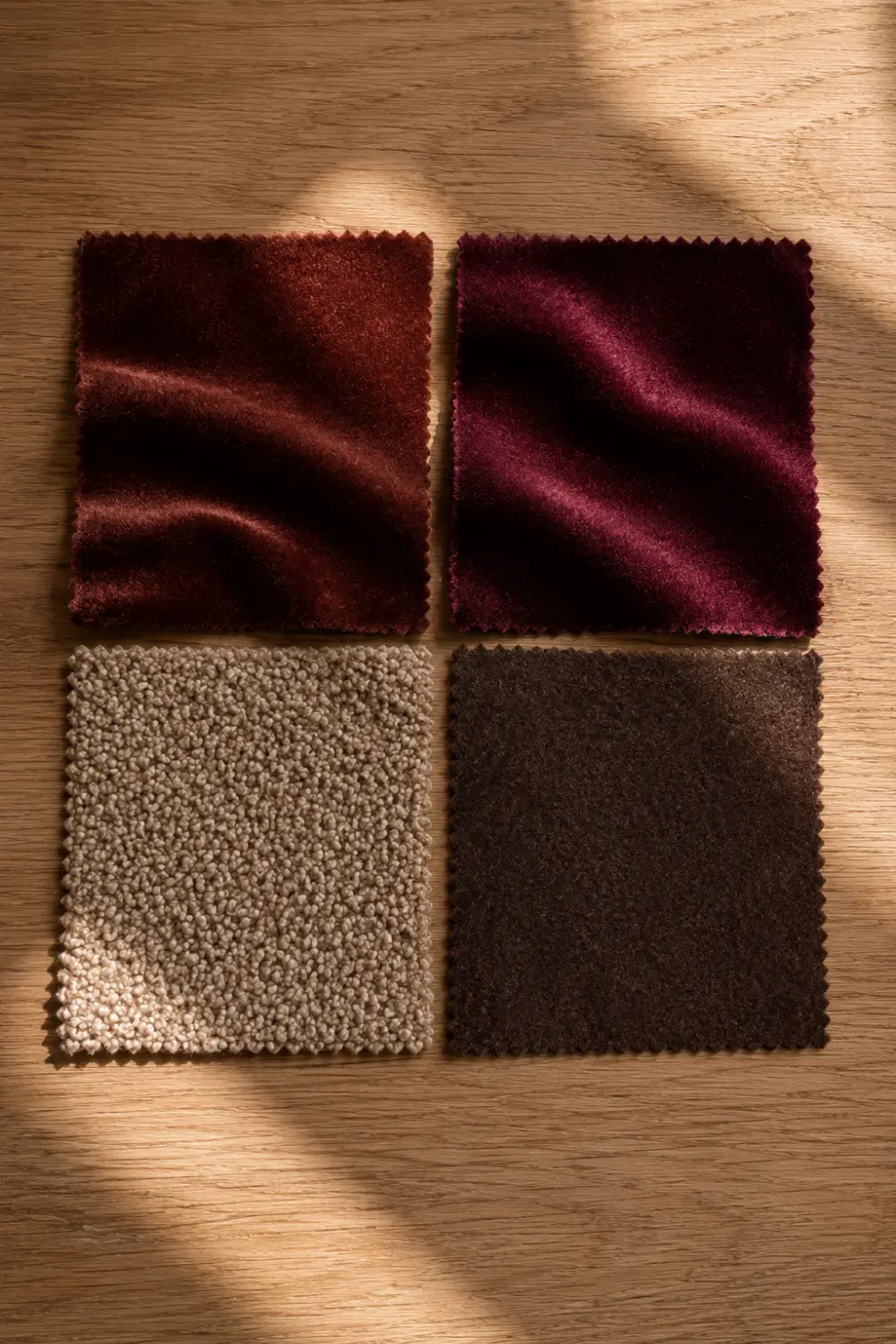
burgundy brown shade comparison swatches
Warm Burgundy vs Cool Burgundy
A warm burgundy leans slightly toward brick or rust, while a cool burgundy leans toward purple or blue-red. Warm burgundy is the easier match for brown furniture and wood tones, since the undertones agree. Cool burgundy can still work, but it needs a warmer brown nearby to keep the room from feeling cold.
Light Brown or Tan vs Deep Chocolate
Light brown and tan open a room up and keep burgundy from feeling heavy, which matters in smaller or lower-light spaces. Deep chocolate brown creates a more dramatic, enveloping look, but it needs a genuinely light element somewhere in the room, a rug, a wall, or natural light, so the space doesn't feel closed in.
How Much of Each Color to Use
The 60/30/10 rule applies well here: let brown (or a warm neutral) cover roughly 60 percent of the room through furniture and flooring, bring burgundy in at around 30 percent through textiles and upholstery, and reserve the last 10 percent for an accent color like brass, cream, or forest green.
6 Ways to Keep a Burgundy and Brown Room From Feeling Heavy or Dated
This pairing has a reputation problem left over from 1990s mahogany dining rooms and overly traditional interiors. These six habits are what separate that dated look from the current version.
Balance Dark Tones With a Light Base
Keep walls, floors, or a large area rug in a lighter neutral so the burgundy and dark brown pieces read as accents against a light foundation rather than piling dark on dark.
Bring In Texture, Not Just Color
Velvet, boucle, linen, and natural wood grain all add depth without adding more color. Texture is what keeps a moody palette from looking flat or overly matched.
Add Metallic or Glass Accents for Contrast
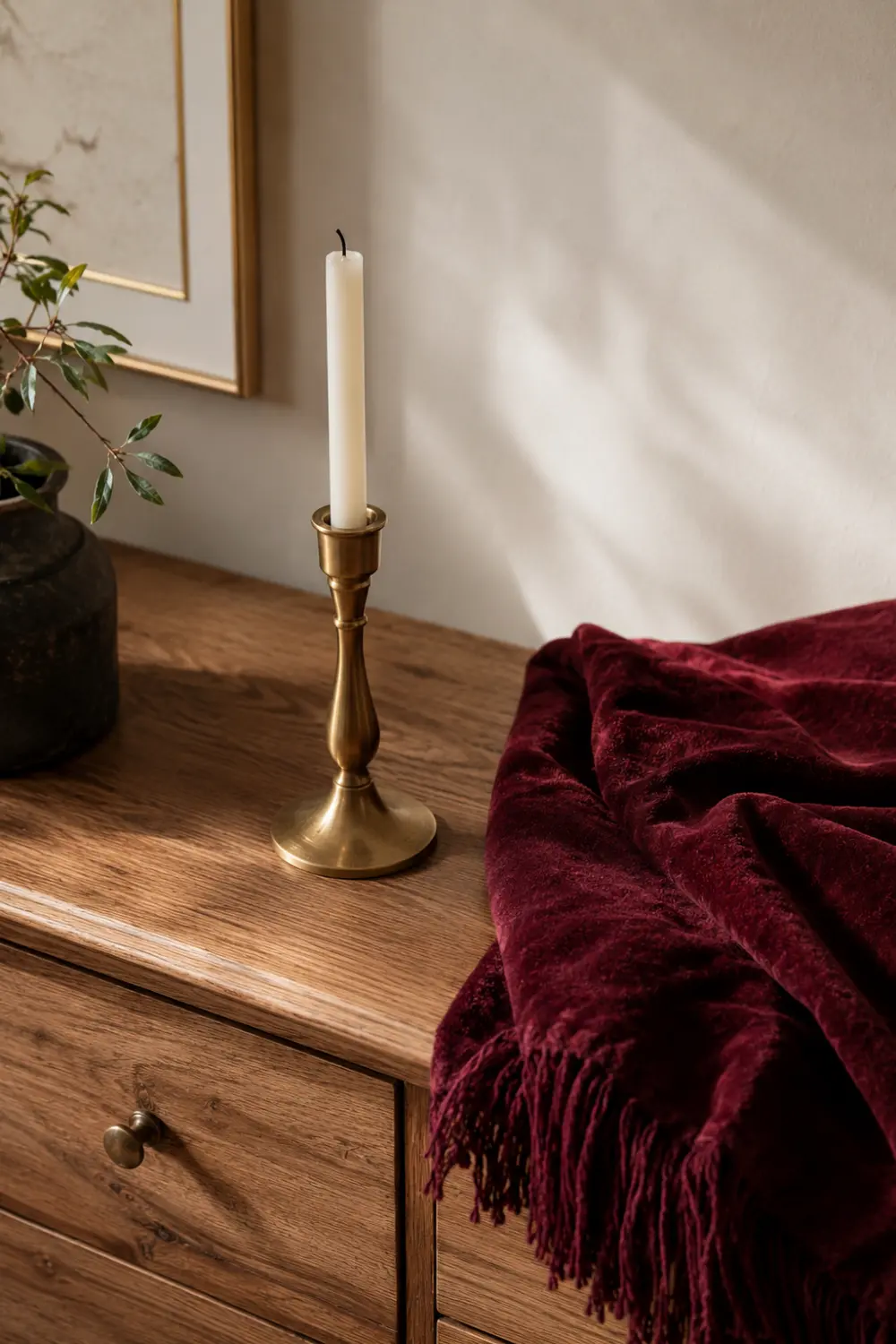
Brass hardware, an amber glass lamp, or a mirrored tray breaks up the density of the two colors and gives the eye somewhere to land.
Use Burgundy as the Accent Color, Brown as the Base
Let brown do the heavy lifting through furniture and flooring, and bring burgundy in through pillows, a throw, or a single upholstered chair. Reversing that ratio, burgundy walls with brown as the accent, is harder to pull off and easier to overdo.
Layer in a Third Neutral
Cream, oatmeal, or soft white keeps the palette from feeling like two colors fighting for attention. It's the same principle as the 10 percent accent rule above, just applied to a neutral instead of a bold color.
Avoid Matching Everything to the Same Undertone
A room where every burgundy and every brown share the exact same undertone can start to look flat or artificial. A little variation, a cooler burgundy pillow against a warmer brown sofa, for example, reads as more collected and less like a matched set.
burgundy brown texture metallic accents
Burgundy and Brown Ideas by Room
The pairing doesn't have to stay in the living room. Here's how it translates to other spaces.
Living Room
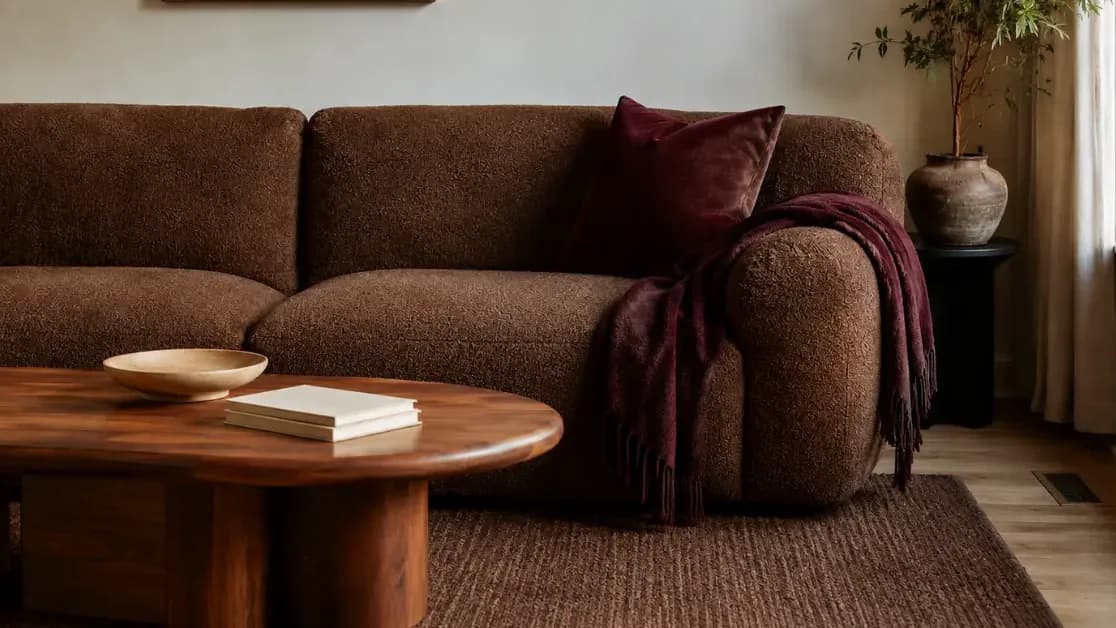
This is the easiest room to start in. A brown boucle or leather sofa as the base, a burgundy accent chair or a couple of burgundy throw pillows, and a brown area rug underneath ties the whole look together without needing to touch the walls.
Bedroom
Burgundy bedding against a brown or wood-toned headboard reads as cozy rather than dark, especially with a warm table lamp on the nightstand. Keep the walls in a lighter neutral if the room doesn't get much natural light.
Dining Room
This is where the pairing's more formal, traditional roots show up naturally, burgundy upholstered dining chairs around a warm wood table. Keep the lighting warm and layered rather than a single overhead fixture, which is often what made older versions of this look feel heavier than intended.
Entryway
A small dose goes a long way here, a burgundy runner rug or a single accent bench against a wood console table. Entryways are usually small and low on natural light, so this is a room where restraint matters more than in a larger space.
Common Mistakes With Burgundy and Brown Rooms
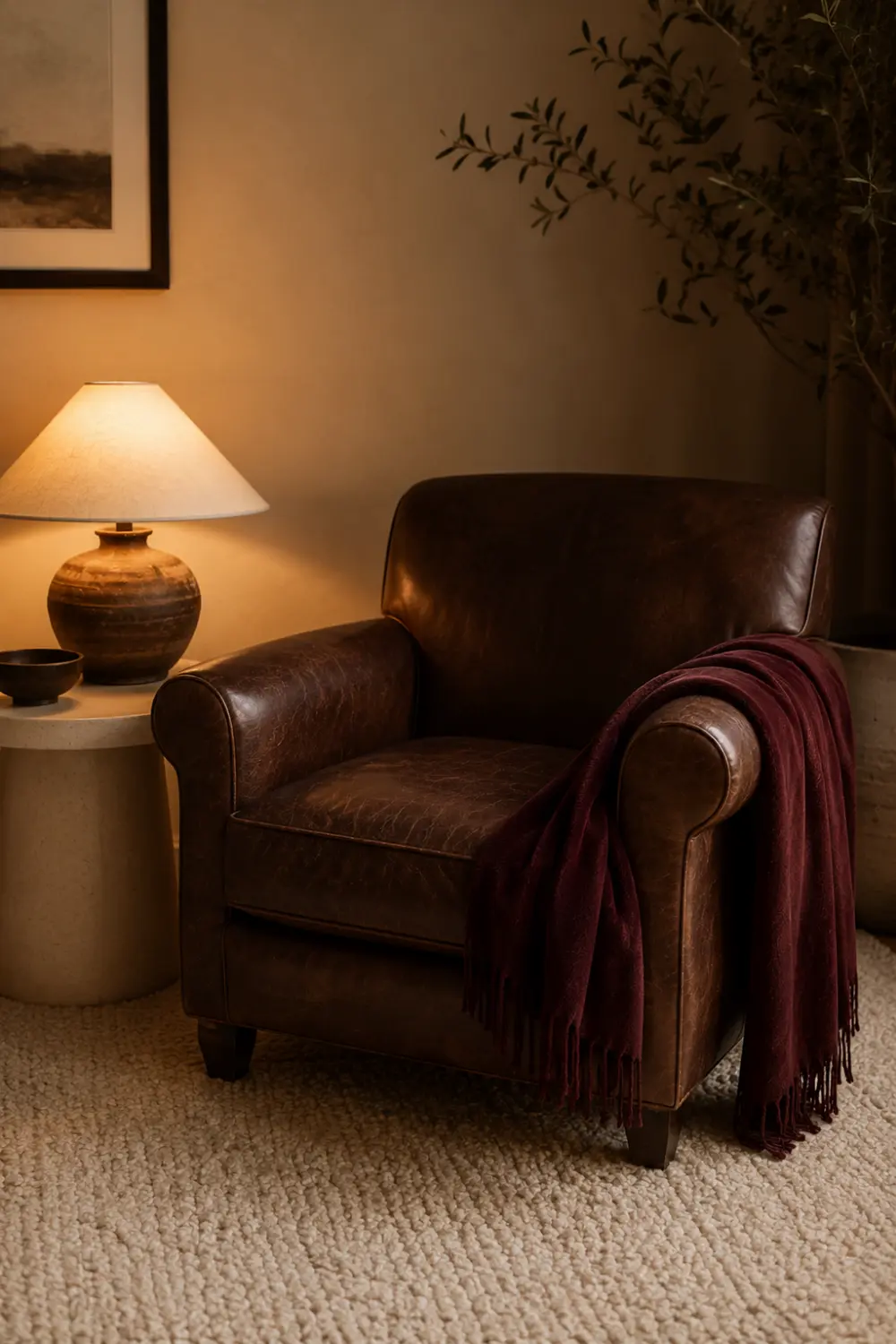
burgundy brown warm light neutral balance
Most complaints about this palette looking dated trace back to one of these three habits.
Using Too Much Burgundy as a Base Color
Burgundy walls, burgundy sofa, and burgundy curtains in the same room removes the contrast that makes the pairing work in the first place. Let brown carry more of the room's square footage.
Skipping Warm Light
Cool white or daylight-toned bulbs make burgundy read as flat or slightly purple instead of rich. A warm bulb, generally in the 2700K to 3000K range, keeps both colors looking the way they're supposed to.
Forgetting a Neutral to Break Up the Palette
Two dark, saturated colors with nothing lighter in between is what reads as heavy. A neutral rug, wall, or piece of furniture gives the eye a place to rest.
Frequently Asked Questions
Does burgundy go with brown?
Yes, burgundy and brown share the same warm undertone family, which is why the pairing reads as intentional rather than random.
What colors go with burgundy in a room?
Warm neutrals like cream and tan, wood tones, brass or gold metallics, and deep greens all pair well with burgundy. Cooler grays and stark whites tend to fight its warmth.
What does not go with burgundy?
Bright, cool-toned colors like true blue, bubblegum pink, or neon shades tend to clash with burgundy's muted, warm depth. Overly cool grays can also make it look dull rather than rich.
What colors go best with burgundy and brown?
Cream, tan, and soft gold work as connecting neutrals, while brass or amber accents add warmth without introducing a competing color.
Is burgundy and brown outdated?
Not when it's used as an accent-and-base pairing with texture and warm light. The dated version came from using both colors in equal, saturated amounts with no lighter neutral to break them up.
What undertone of brown works best with burgundy?
A warm brown, leaning toward tan, rust, or chestnut rather than gray-brown, matches burgundy's own warm undertone most naturally.
Does burgundy and brown work in a small room?
Yes, as long as a light neutral, on the walls, floor, or a rug, takes up the majority of the visible space. Small rooms are less forgiving of two dark colors with nothing light in between.
Conclusion
Burgundy and brown work in a modern home when brown carries the room and burgundy shows up as the accent, backed up by texture and warm light. Start with one piece, a pillow, a throw, a single chair, and build the rest of the room around how it feels rather than trying to match every surface to the same two colors.