
Your bedroom isn't actually small. It just looks that way.
Most small bedrooms feel cramped for reasons that have nothing to do with square footage. The wrong wall color, an oversized bed pushed against a small window, curtains hung too low. These small choices add up fast, and they're usually the real reason a room feels tight instead of comfortable.
The good news is that none of this requires knocking down a wall or hiring a contractor. With a few intentional changes to color, furniture, and layout, you can make a small bedroom feel noticeably bigger, brighter, and calmer, all without spending a dollar on renovation.
Here are 10 designer-approved ways to create the illusion of space in even the tightest bedroom.
Why Your Small Bedroom Feels Smaller Than It Actually Is
Before changing anything in your bedroom, it helps to understand why it feels small in the first place.
Space isn't only about square footage. It's about how your eyes read a room. When there's too much visual clutter, low natural light, or furniture that doesn't match the scale of the space, your brain interprets the room as smaller than it actually is. This is spatial perception at work, and it responds to small design changes far more than most people expect.
A few common culprits show up again and again in small bedrooms:
Dark, heavy wall colors that absorb light instead of reflecting it.
Bulky furniture that overwhelms the floor plan.
Curtains hung too close to the window frame, which shortens the wall visually.
Cluttered surfaces that leave no breathing room for the eye.
Uneven lighting that leaves corners dim and closed off.
Once you understand what's working against your space, it becomes much easier to fix it. That's exactly what the next few sections will walk you through.
1. Choose Light and Airy Wall Colors That Open Up Your Space
Paint color is one of the fastest ways to change how large a room feels, and it's also one of the most affordable.
Light, soft colors reflect natural light instead of absorbing it. That reflection is what makes a small bedroom feel open rather than boxed in. Soft white, warm greige, pale blue, and muted sage are especially effective because they brighten the walls without feeling cold or clinical.
Dark colors aren't automatically off-limits. A moody navy or charcoal can work beautifully in a small bedroom, but only when paired with plenty of natural light and lighter furnishings to balance it out. If your room doesn't get much daylight, it's usually safer to stick with lighter tones.
Consider painting the ceiling a shade lighter than your walls, too. This subtle contrast draws the eye upward and makes the room feel taller instead of boxed in.
2. Create a Consistent Color Palette for a More Spacious Look
Color choice matters, but so does consistency.
When a bedroom mixes too many colors, patterns, or finishes, the eye has to work harder to process the space, which makes it feel busier and smaller. A consistent color palette does the opposite. It lets the eye move smoothly across the room without interruption, which creates a calmer, more spacious feeling.
A simple approach works well here: choose one main wall color, one or two complementary accent colors, and stick with them across your bedding, curtains, and decor. A soft white wall paired with warm beige linens and a single sage green accent pillow feels intentional and open. The same room with five competing colors and patterns feels chaotic no matter how big it actually is.
This doesn't mean your bedroom needs to be monochrome. It simply means every color you introduce should feel like it belongs to the same story.
3. Use Vertical Space to Make Your Bedroom Feel Taller
When floor space is limited, the walls become your best resource.
Tall, narrow furniture pieces such as bookshelves or slim wardrobes draw the eye upward, which makes the ceiling feel higher and the room feel bigger. The same principle applies to wall decor. Instead of hanging one small frame in the center of a wall, try a vertical arrangement of two or three frames stacked with even spacing.
Floating shelves are another practical option. Mounting a shelf above eye level keeps your floor clear for movement while still giving you a place to store books, plants, or decorative objects. Every square foot you move off the floor and onto the wall gives your bedroom more visual breathing room.
4. Pick Furniture That Fits Your Bedroom Size
Furniture scale is one of the most overlooked reasons a small bedroom feels cramped.
A king-size bed with a tall, heavy headboard might look stunning in a showroom, but in a compact bedroom, it can dominate the entire space. Before buying furniture, measure your room carefully and leave at least 24 to 30 inches of walking space around the bed and any dressers.
Choosing furniture with visible legs, rather than pieces that sit flush with the floor, also helps. When light can pass underneath a bed frame or nightstand, the floor feels more open, and the room feels larger even though the furniture itself hasn't changed size.
If you're working with an especially tight layout, consider a full or queen bed instead of a king, and choose a dresser that's narrower but taller to keep storage without eating up floor space.
5. Choose Multi-Functional Furniture to Save Space
In a small bedroom, every piece of furniture should earn its place by doing more than one job.
A bed frame with built-in storage drawers is one of the most practical upgrades you can make. Instead of adding a separate dresser or storage bench, a storage bed frame gives you a place to keep off-season clothing, extra linens, or shoes, all hidden beneath the mattress.
Other multi-functional options worth considering include a nightstand with drawers instead of an open shelf, an ottoman that doubles as extra seating and storage, or a wall-mounted desk that folds away when it's not in use. The goal is simple: fewer individual pieces, more purpose from each one.
If you're working with limited bedroom space, these small home office ideas can help you create a functional workspace without taking over the room.
6. Hang Curtains Higher and Wider to Create the Illusion of Space
Where you hang your curtains matters more than which curtains you choose.
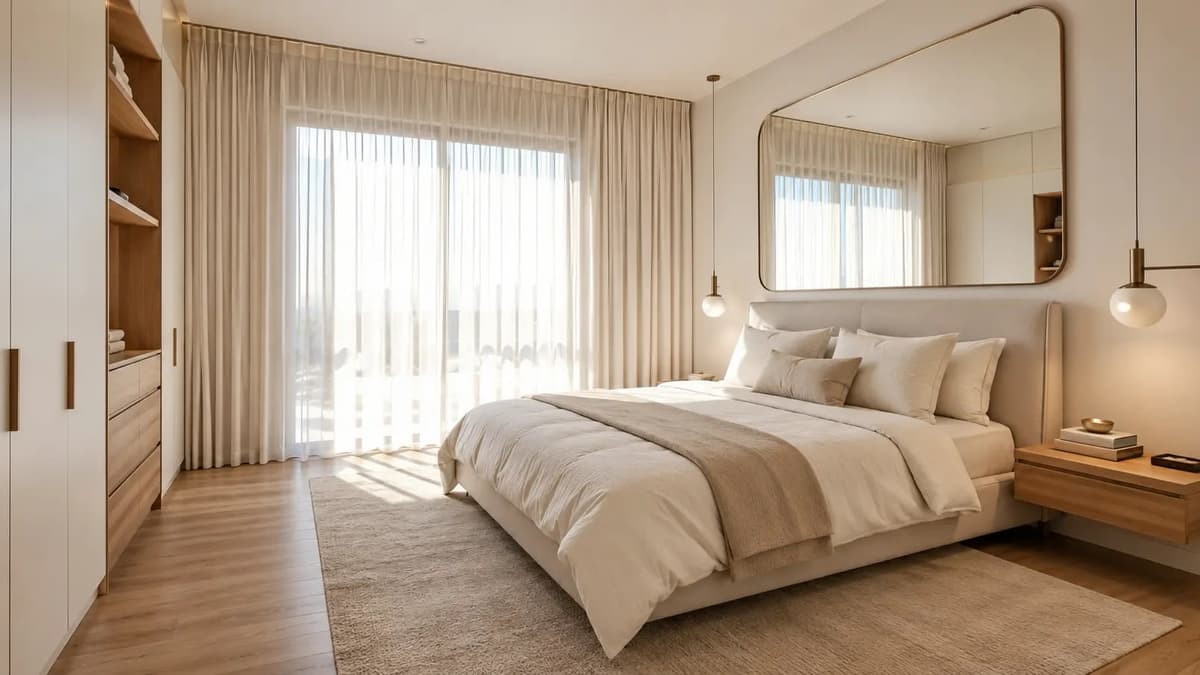
Most people mount curtain rods just above the window frame, which visually shortens the wall and makes ceilings feel lower. Instead, hang your rod as close to the ceiling as possible, even if that means it sits eight or ten inches above the window itself. This simple change draws the eye upward and makes the entire wall feel taller.
Width matters too. Extending the rod six to twelve inches beyond each side of the window frame lets you push the curtains fully open during the day, which lets in more natural light and makes the window itself appear larger than it is.
7. Use Mirrors Strategically to Reflect Light and Add Depth
Few tricks make a small bedroom feel bigger as quickly as a well-placed mirror.
Mirrors reflect both natural and artificial light, which brightens the room and creates the illusion of a second window or an extended wall. Positioning a large mirror directly across from your actual window is one of the most effective placements, since it doubles the amount of daylight bouncing around the room.
Avoid clustering multiple small mirrors. One well-placed, appropriately sized mirror does far more for a small bedroom than several scattered smaller ones.
8. Make the Room Feel Bigger With the Right Rug and Lighting
Rugs and lighting work together to shape how big or small a bedroom feels underfoot and overhead.
A rug that's too small makes a room look choppy, since it visually cuts the floor into disconnected sections. Choosing the largest area rug your budget allows, ideally one that extends slightly under the bed and nightstands, creates a continuous visual plane that makes the entire floor feel more expansive.
Lighting deserves just as much attention. Relying on a single overhead fixture often leaves corners dim, which makes those areas feel smaller and less usable. Layering your lighting with a floor lamp in one corner, a bedside lamp on each nightstand, and your ceiling fixture creates even light throughout the room. Warm white bulbs, rather than cool or harsh white ones, also make a small bedroom feel more inviting instead of stark.
9. Declutter and Create a More Open Bedroom Layout
No amount of clever design can compensate for a cluttered room.
Clutter is one of the fastest ways to make a small bedroom feel even smaller, because it gives the eye no place to rest. Start by clearing flat surfaces such as your dresser top and nightstands, keeping only a few intentional items in place. Everything else should have a designated home, whether that's a drawer, a labeled storage bin, or an under-bed container.
Your furniture layout matters too. Instead of pushing every piece against the walls, try floating your bed slightly away from the wall if space allows, which can actually improve traffic flow and make the room feel more thoughtfully arranged rather than simply filled. Walk through your bedroom and note anywhere you have to turn sideways or step around furniture. Those pinch points are usually the first areas worth rethinking.
10. Small Bedroom Design Mistakes That Make Your Room Look Smaller
Even with the best intentions, a few common mistakes can undo all your hard work.
Hanging curtains too low or too narrow, which shortens the wall and window visually.
Choosing a rug that's too small for the room, which breaks up the floor space.
Filling every wall with décor, leaving no visual breathing room.
Pushing oversized furniture into a room it doesn't fit, rather than choosing pieces sized for the space.
Skipping lighting layers and relying on one dim overhead fixture.
Using heavy, dark patterned bedding that overwhelms a small room.
Avoiding these mistakes is often just as valuable as adding new design elements. Sometimes the simplest fix is removing what isn't working rather than adding something new.
Final Thoughts: Make Your Small Bedroom Feel Bigger Without Remodeling
A small bedroom doesn't have to feel small.
With the right wall color, a considered furniture layout, smart use of mirrors and lighting, and a genuinely decluttered space, you can transform how your bedroom feels without touching a single wall. These changes are affordable, achievable in a weekend, and make a noticeable difference the moment you walk through the door.
Start with one or two changes that feel most doable for your space, whether that's repainting, rehanging your curtains, or finally clearing off your nightstand. Small, intentional updates add up to a bedroom that feels calm, open, and genuinely yours.
Frequently Asked Questions
What color makes a small bedroom look bigger?
Light, soft colors such as soft white, pale blue, warm greige, and muted sage reflect natural light and make walls feel like they recede rather than close in, which creates a more spacious look.
Where should I hang curtains in a small bedroom?
Mount the rod as close to the ceiling as possible and extend it several inches beyond each side of the window frame. This makes the wall look taller and the window appear larger.
Do mirrors really make a room look bigger?
Yes. A well-placed mirror, especially one positioned across from a window, reflects natural light and creates the illusion of a second window or an extended wall.
What size bed is best for a small bedroom?
A full or queen bed usually works better than a king in a small bedroom, since it leaves enough walking space around the furniture, generally recommended at 24 to 30 inches.
Should I use a big rug or a small rug in a small bedroom?
Choose the largest rug your budget and layout allow. A rug that extends slightly under the bed and nightstands creates one continuous visual plane, rather than choppy, disconnected sections of flooring.