14 Ways to Make Your House Look Expensive on a Budget
August 10, 2026 · Lilac Pearls
14 budget friendly ways to make your house look expensive, from lighting and hardware swaps to styling tricks designers use in high-end homes.
What if your home could look noticeably more expensive without replacing your furniture or spending thousands on renovations? The secret is rarely the price tag. it’s the small details that make a space feel polished, intentional, and well designed. From better lighting and properly sized rugs to elevated hardware and simple styling tricks, a few smart changes can completely transform the way your home looks and feels. Here are 14 budget friendly ways to make your house look expensive, plus a few common mistakes to avoid if you want that high-end look to actually work.
How to Make Your House Look Expensive Without Spending a Fortune
These 14 ideas focus on the details that designers rely on most: light, proportion, texture, and restraint. You do not need to tackle all of them at once. Start with one or two rooms and build from there.
1. Upgrade Your Lighting
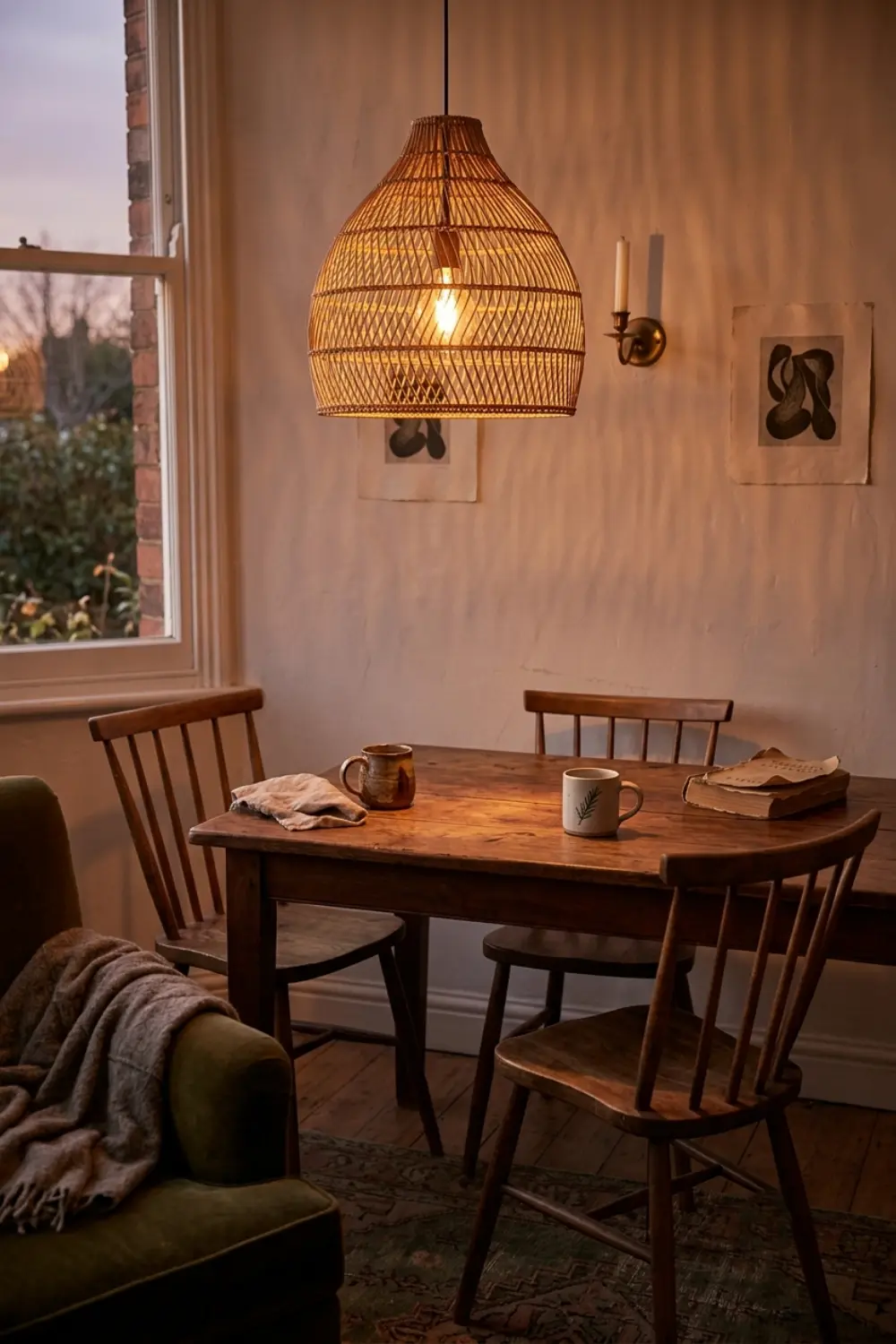
Lighting has more influence on how expensive a room feels than almost anything else. Harsh overhead light flattens a space, while layered lighting adds depth and warmth. Instead of relying on one ceiling fixture, add a floor lamp, a table lamp, and a statement pendant with a warm bulb (around 2700K). A single dramatic light fixture over a dining table or entryway instantly reads as high-end, even when the rest of the room is simple.
warm rattan pendant light dining nook
2. Change Your Cabinet and Door Hardware
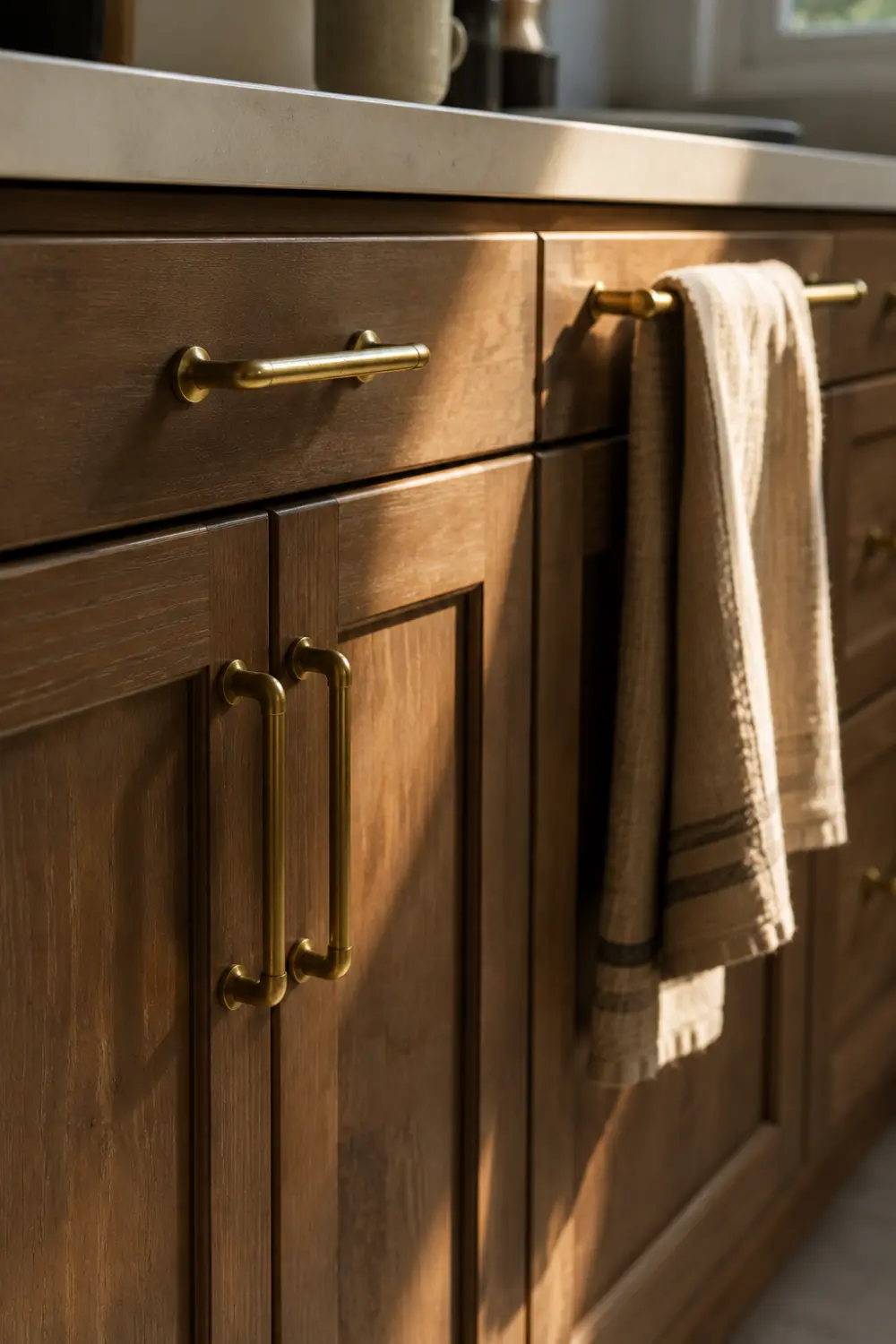
Swapping out builder-grade knobs and pulls is one of the fastest, most affordable upgrades you can make. Worn brass and dated finishes make a kitchen or bathroom feel tired, while a cohesive matte black or brushed brass set makes the same cabinets look custom. This project usually takes a single afternoon and a screwdriver.
brushed brass cabinet hardware closeup
3. Hang Curtains High and Wide
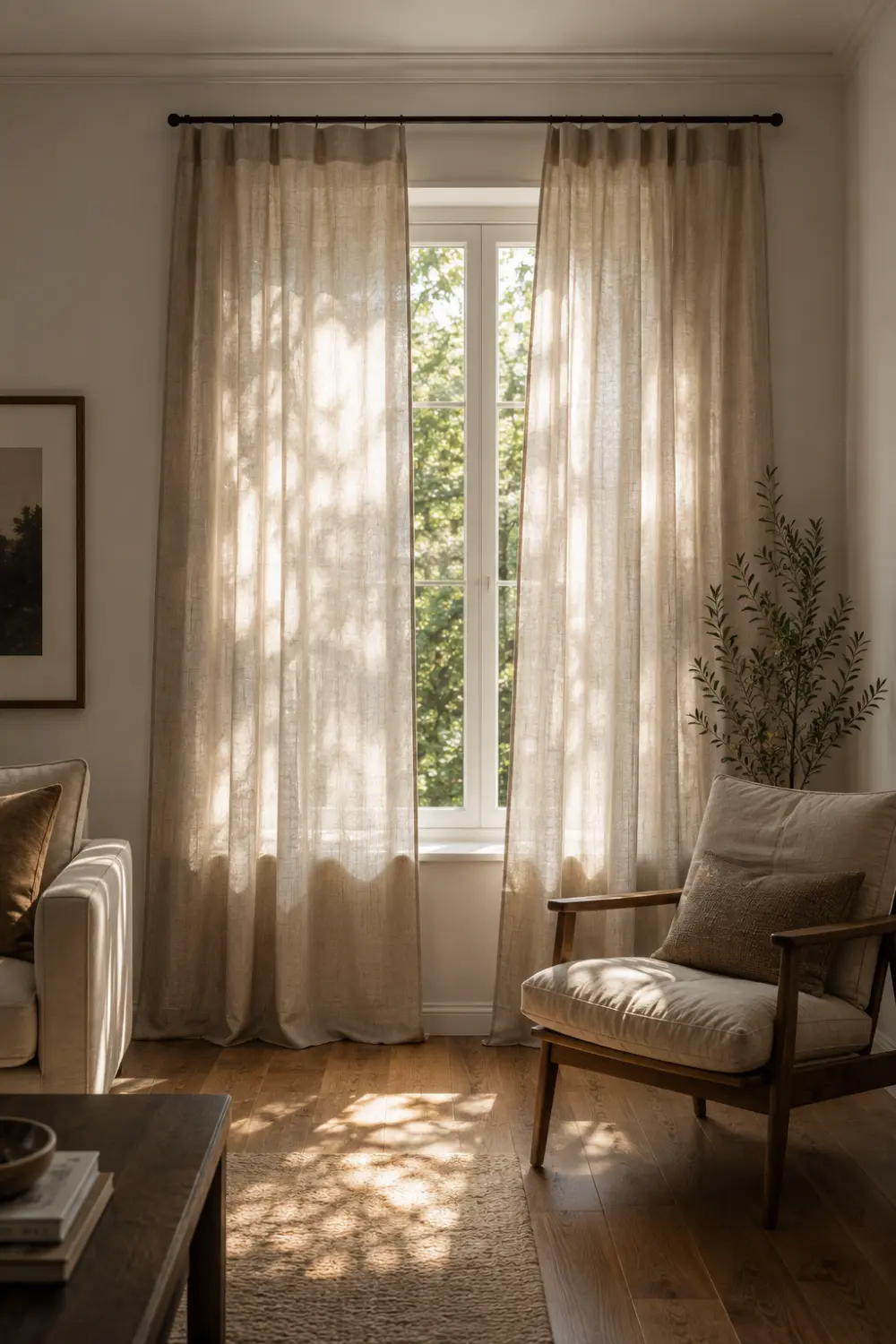
Curtains hung too close to the window frame make ceilings feel lower and rooms feel smaller. Designers hang curtain rods a few inches from the ceiling and extend them well beyond the window frame on each side. This simple trick makes windows appear larger, ceilings appear taller, and the whole room feel more grand, using the same window you already have.
linen curtains hung high living room
4. Add Architectural Details With Paint or Trim
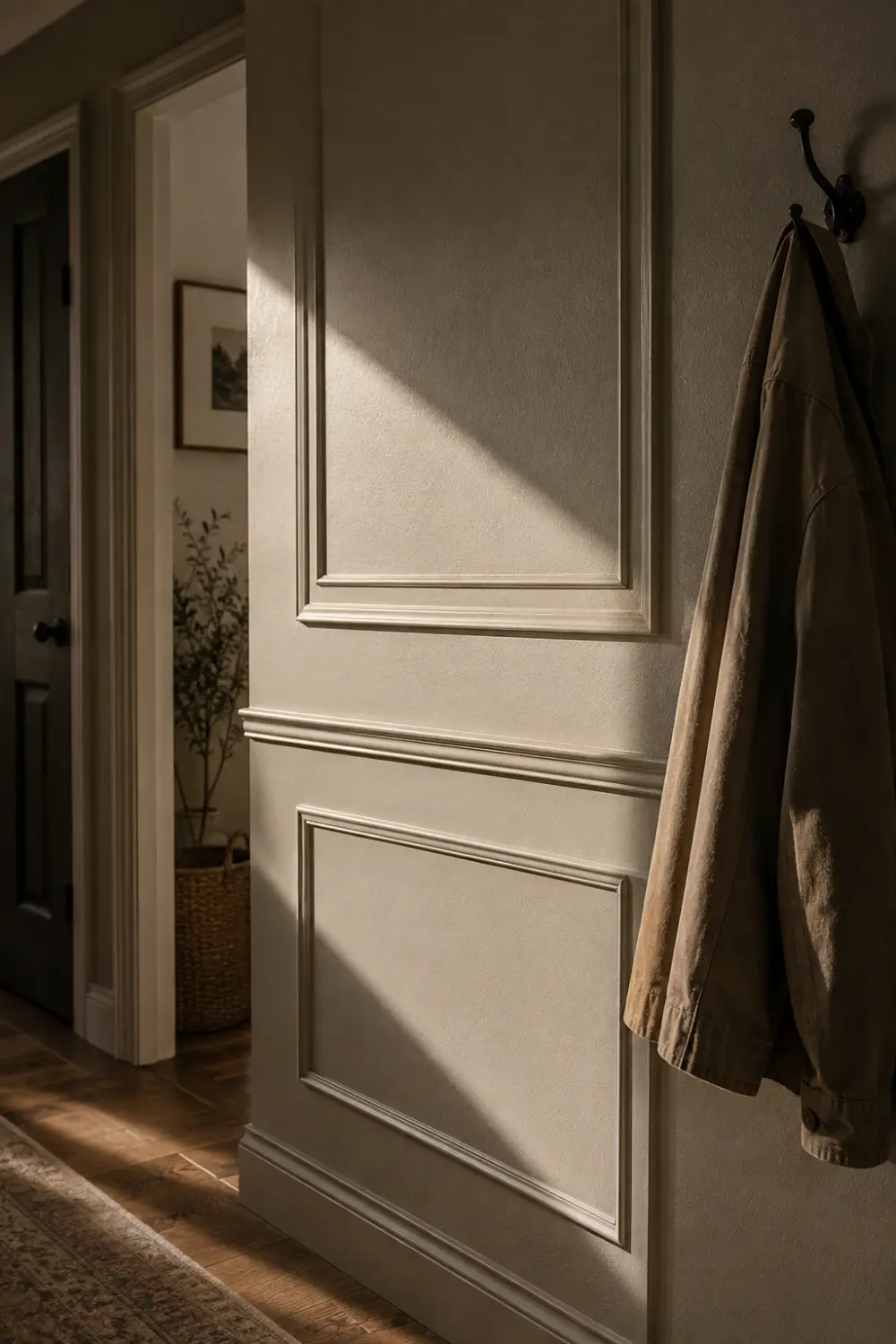
Plain, flat walls rarely feel expensive, no matter how nice the furniture is. Adding board and batten, picture frame trim, or a painted ceiling gives a room the kind of architectural interest usually found in older or custom-built homes. Even a single accent wall with simple trim, painted the same color as the wall for a subtle, tone-on-tone look, can make a room feel considerably more custom.
If you are not sure which direction fits your space, Home Decor Styles Explainedis a helpful starting point for choosing details that match your home's overall style instead of adding trim that feels out of place.
picture frame trim hallway detail
5. Choose the Right Size Rug and Arrange Furniture Around It
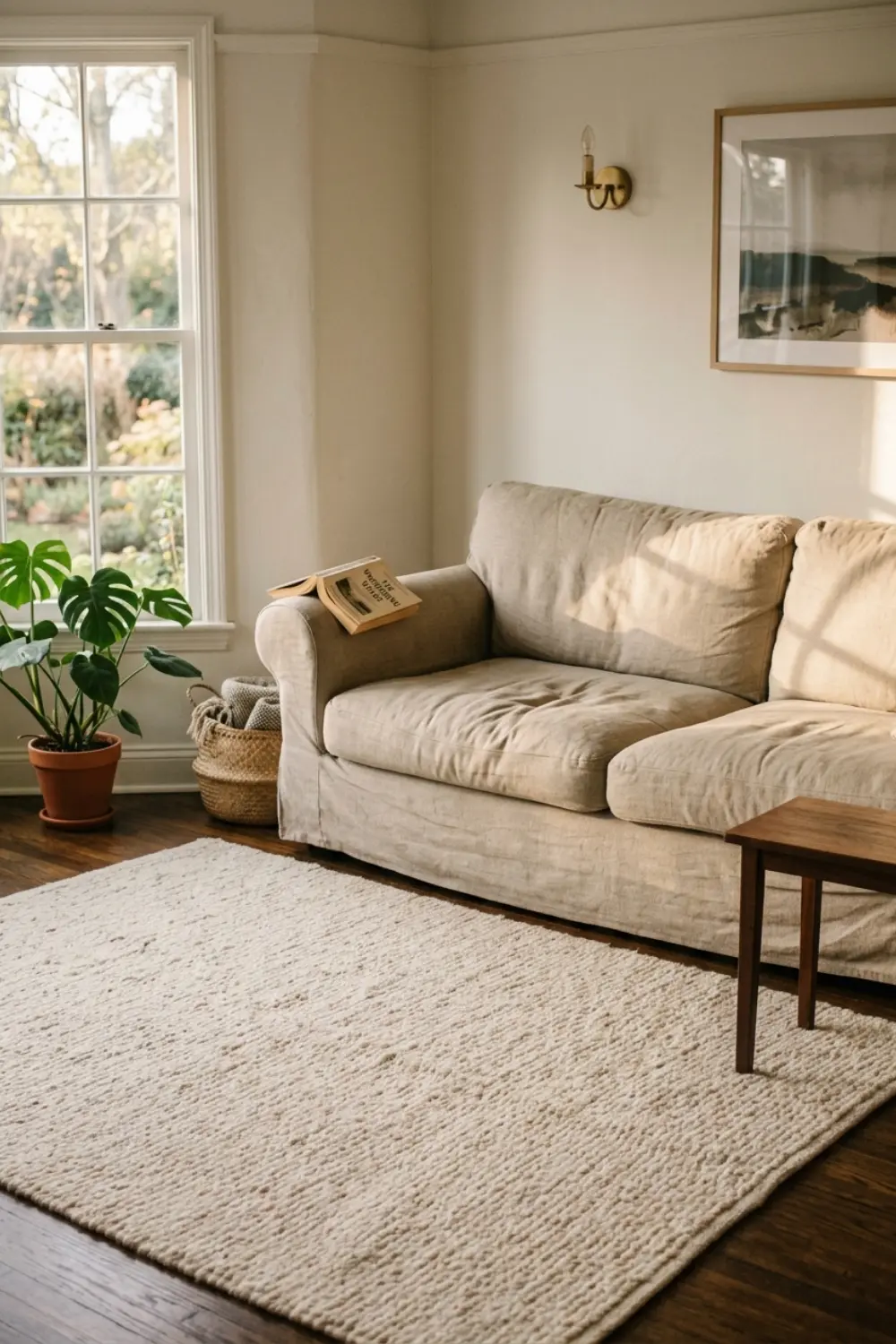
A rug that is too small is one of the most common reasons a room looks cheap instead of pulled together. In a living room, aim for a rug large enough that at least the front legs of every major piece of furniture rest on it. In a bedroom, the rug should extend well beyond the sides of the bed. Once the rug is sized correctly, arrange furniture to float slightly away from the walls rather than pushing everything to the perimeter, which creates a more intentional, grounded layout.
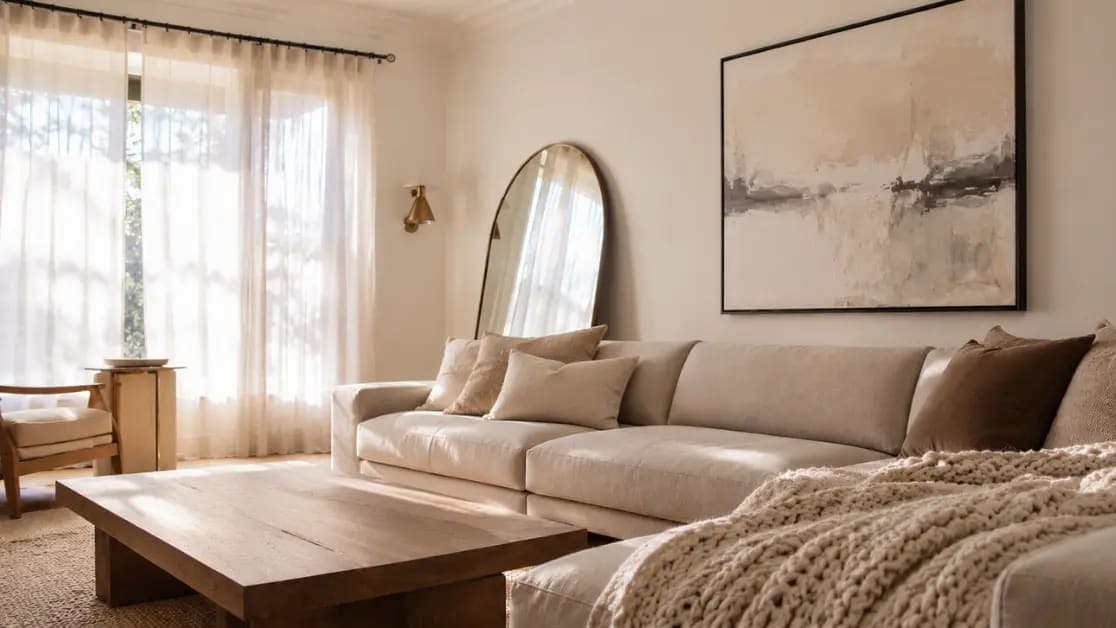
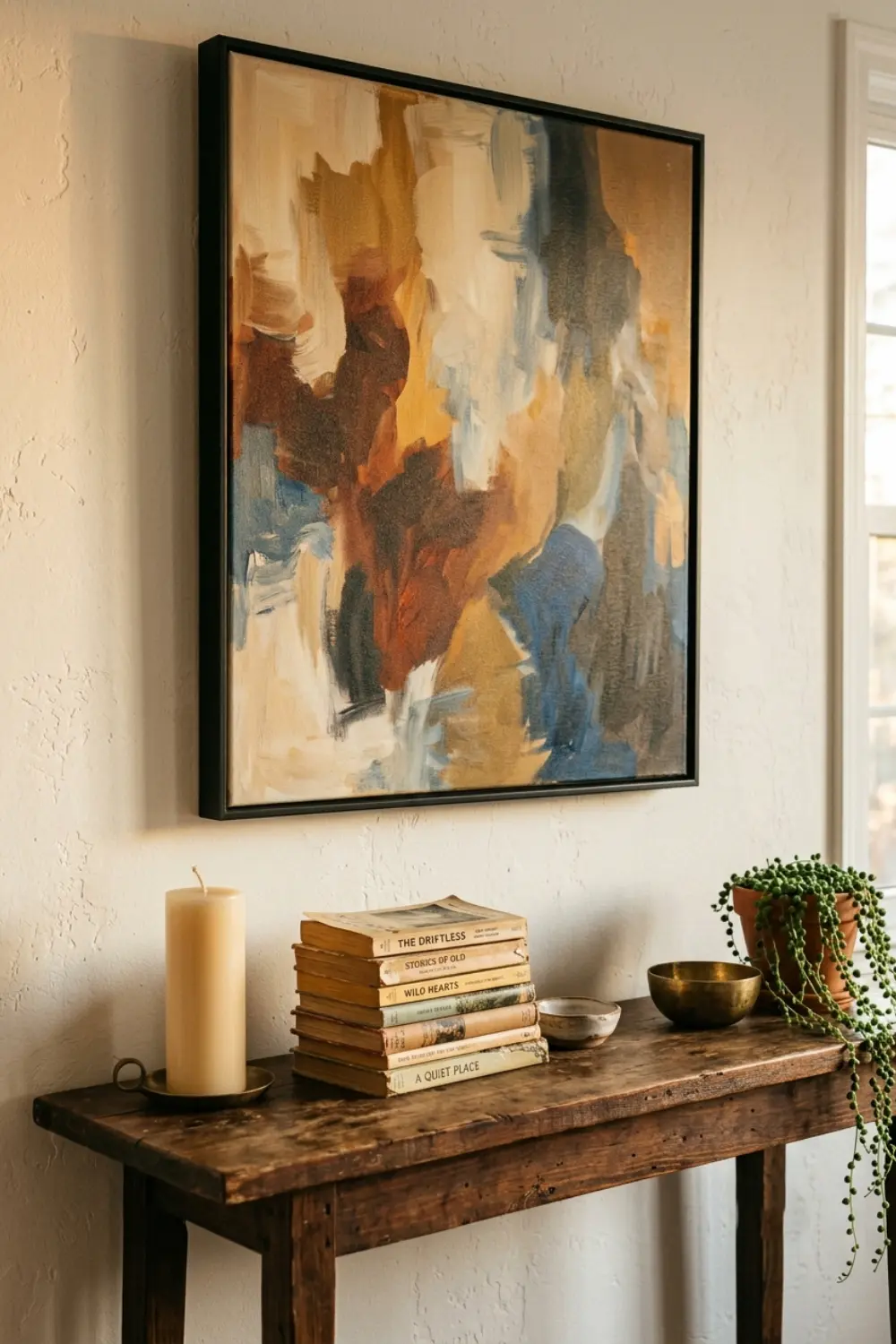
Small, scattered artwork tends to make walls look busy and unfinished. One large piece, or a tightly arranged gallery of a few coordinated pieces, creates a focal point that reads as curated rather than random. As a general rule, art placed over furniture should cover about two-thirds of the furniture's width, and the center of the piece should sit at roughly eye level.
If you are renting or want to avoid wall damage, How to Hang Wall Decor Without Nails walks through renter-friendly hanging methods that still look secure and intentional. For a full gallery approach, 17 Corner Wall Gallery Ideas has layout ideas that work especially well in awkward or underused corners.
oversized abstract wall art console
7. Add Mirrors to Reflect Light
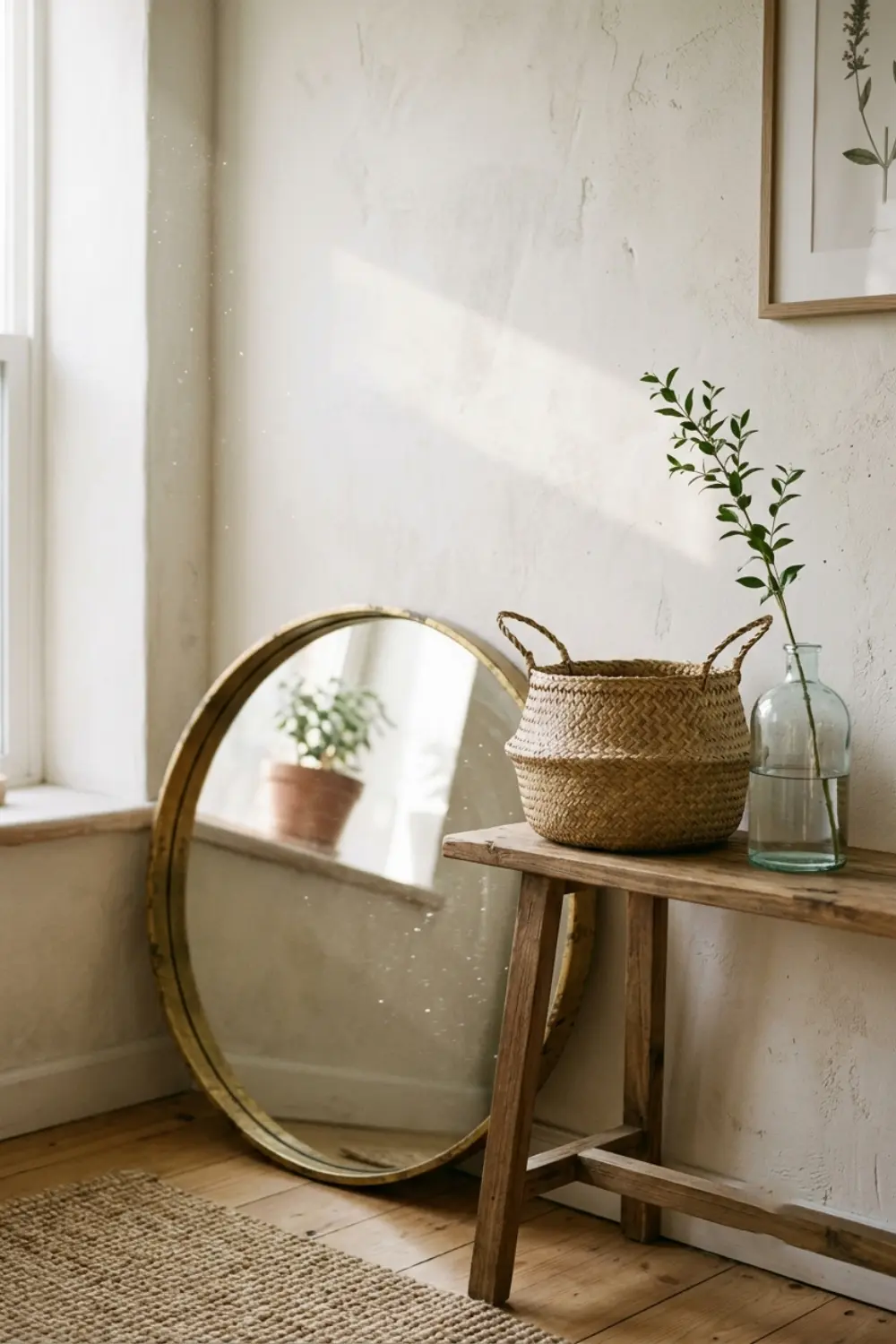
Mirrors do double duty. They bounce natural light around a room, making it feel brighter and larger, and a well-chosen frame adds a decorative moment on its own. An oversized round or arched mirror placed opposite a window, or leaned against the wall in an entryway, is one of the simplest ways to make a space feel more open and finished.
round gold mirror natural light
8. Bring in Natural and High-Quality-Looking Materials
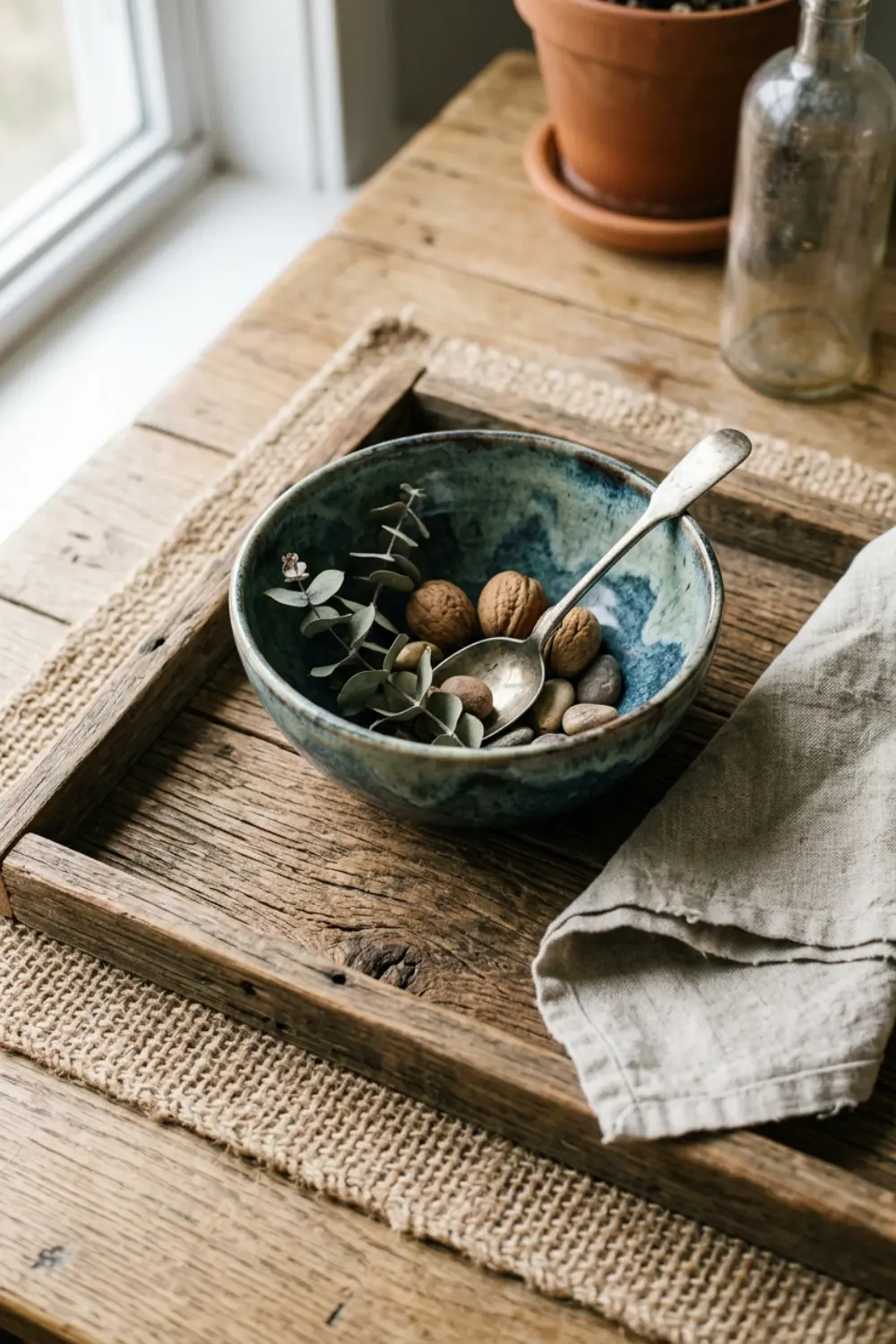
Materials communicate quality even from across a room. Wood, rattan, linen, stone, and ceramic all read as more expensive than plastic, faux finishes, or shiny synthetic fabrics, even at similar price points. When shopping on a budget, look for one or two natural-material pieces per room, such as a wood tray, a woven basket, or a linen throw pillow cover, rather than trying to replace everything at once.
natural wood ceramic tray detail
9. Declutter and Style Surfaces Intentionally
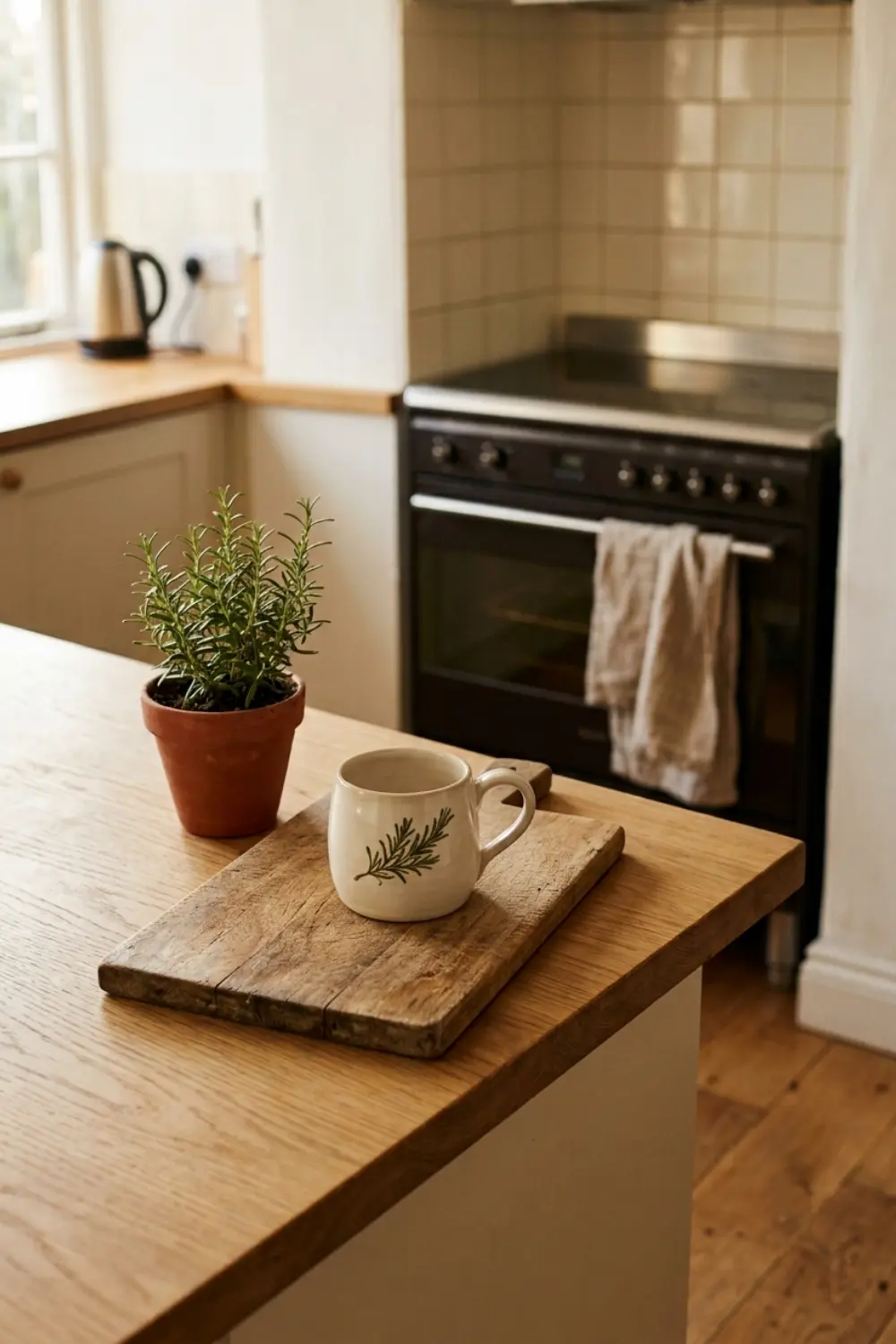
Clear surfaces almost always look more expensive than full ones. Instead of leaving mail, chargers, and random items out on counters and tables, group what you use daily into a tray or basket and clear everything else. Then style the empty surface with two or three items of varying height, like a candle, a small plant, and a stack of books, rather than leaving it completely bare or overly full.
Decluttering tends to have the biggest visual payoff in the rooms that collect the most, like the kitchen counter, the home office desk, and the laundry room shelves. 23 Small Laundry Room Organization Ideas for Small Homes have practical ideas for keeping laundry organized.
decluttered kitchen counter styling
10. Use a Sophisticated Color Palette
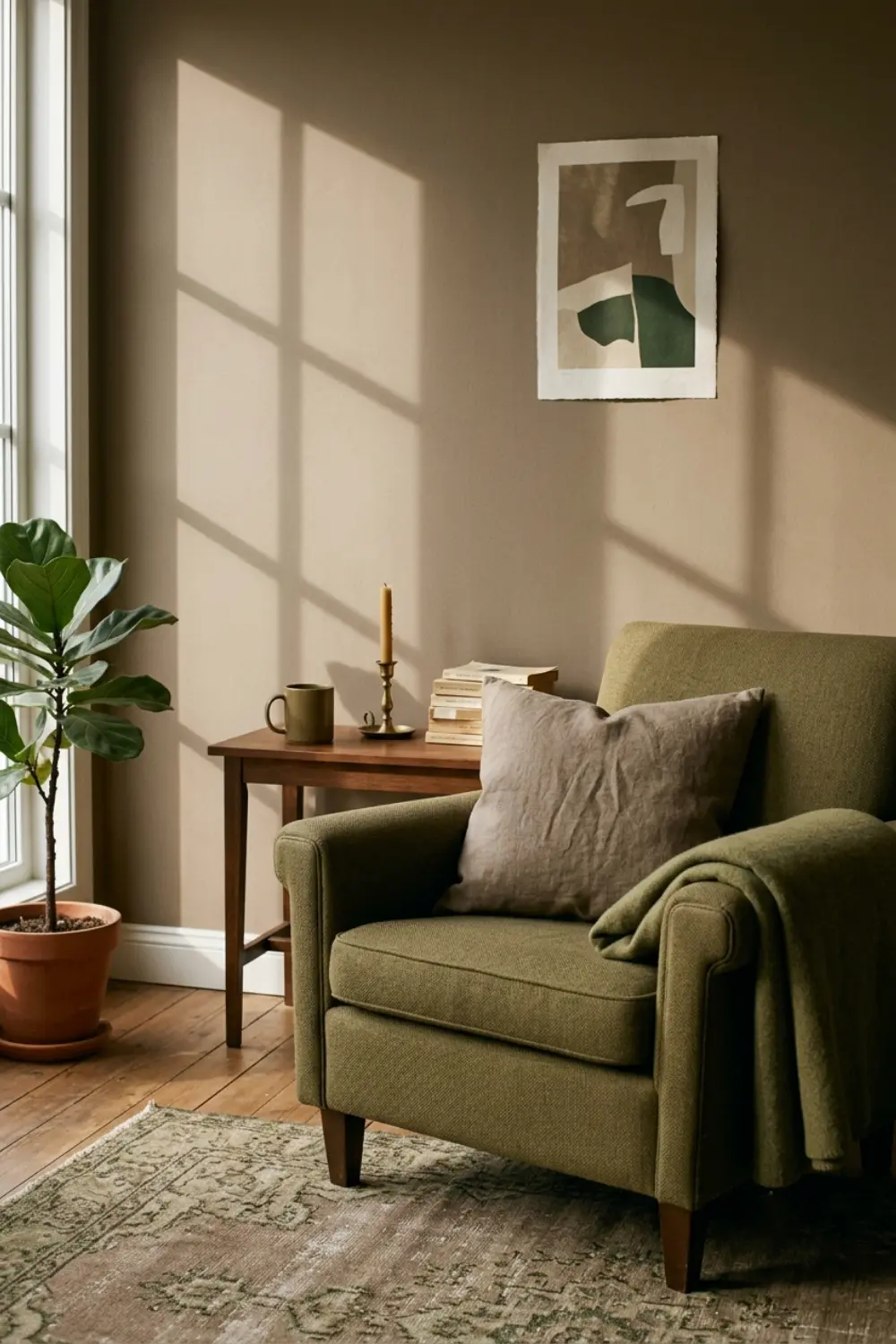
Rooms that feel expensive usually stick to a restrained color palette, often two to three main colors with a few tonal variations layered throughout the space. Bright, high-contrast, or trend-driven color combinations tend to feel busier and date faster. Warm neutrals, soft greens, muted blues, and deep earthy tones consistently read as more sophisticated and timeless, especially when paired with matte finishes instead of glossy ones.
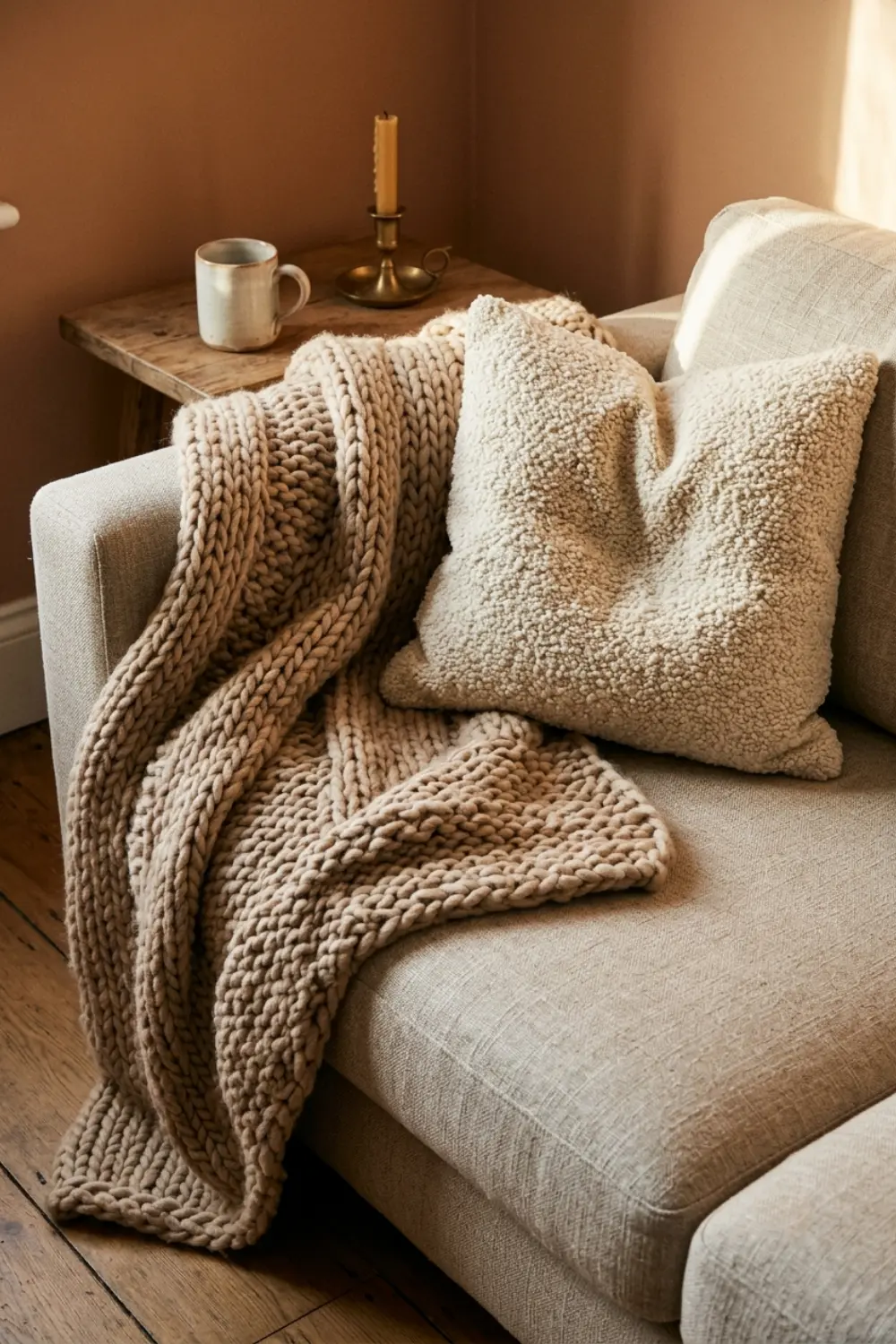
Thin, flat throw pillows and worn, mismatched blankets are an easy way for a room to look cheap even when the furniture underneath is nice. Swapping in pillow covers with texture, like linen, boucle, or a subtle weave, along with a thicker, well-made throw, adds an immediate sense of comfort and quality. Down-alternative pillow inserts also give pillows a fuller, more structured look than the thin inserts that often come with budget covers.
chunky knit throw boucle cushion
12. Make Your Entryway and Exterior Look Polished
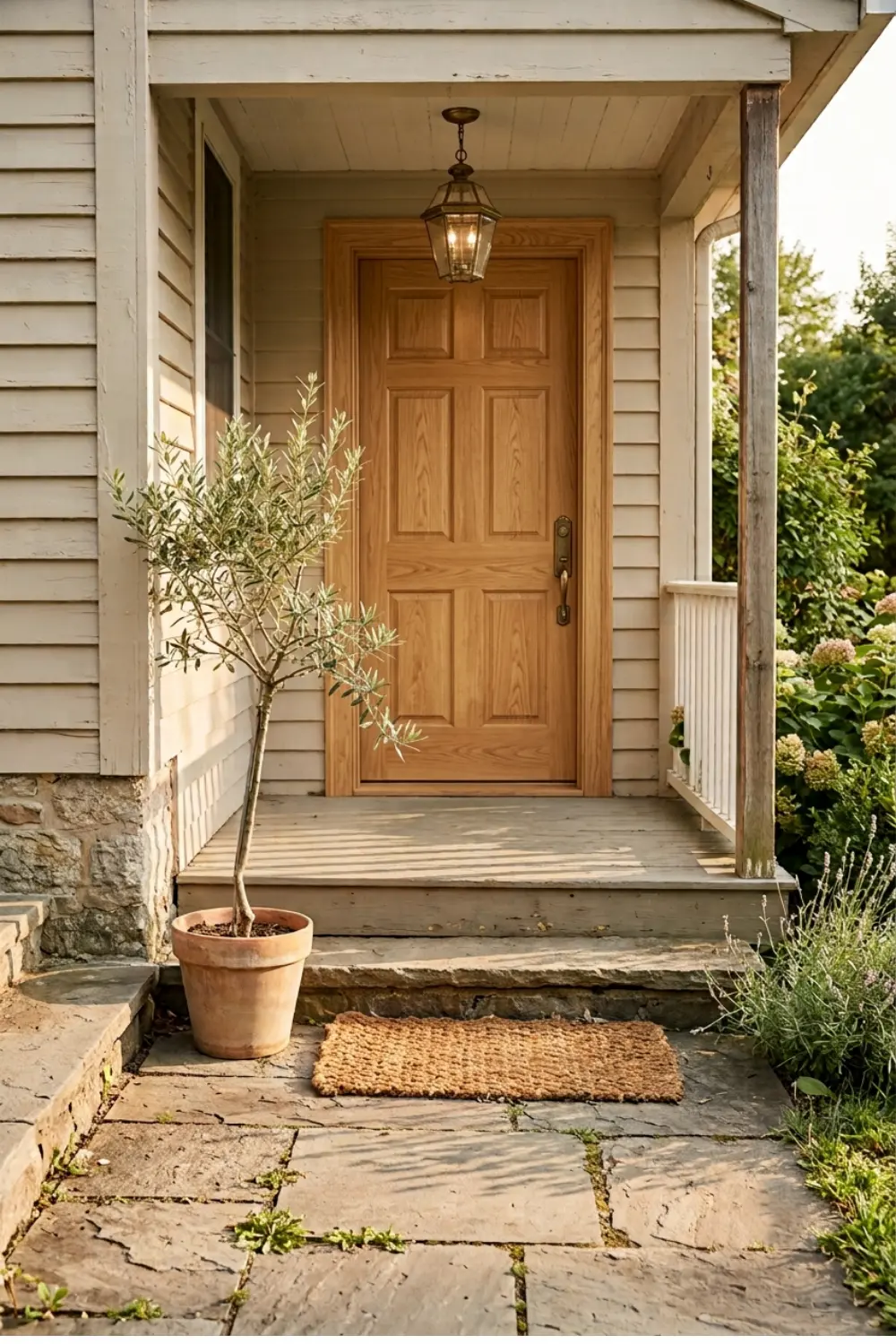
First impressions happen before anyone walks through the door. A fresh coat of paint on the front door, updated house numbers, a new doormat, and simple, well maintained landscaping make a home feel cared for and elevated from the curb. Inside the entryway, a console table, a mirror, and a place to put shoes and keys go a long way toward setting the tone for the rest of the house.
polished front porch entryway
13. Mix Vintage, Thrifted, and Personal Pieces
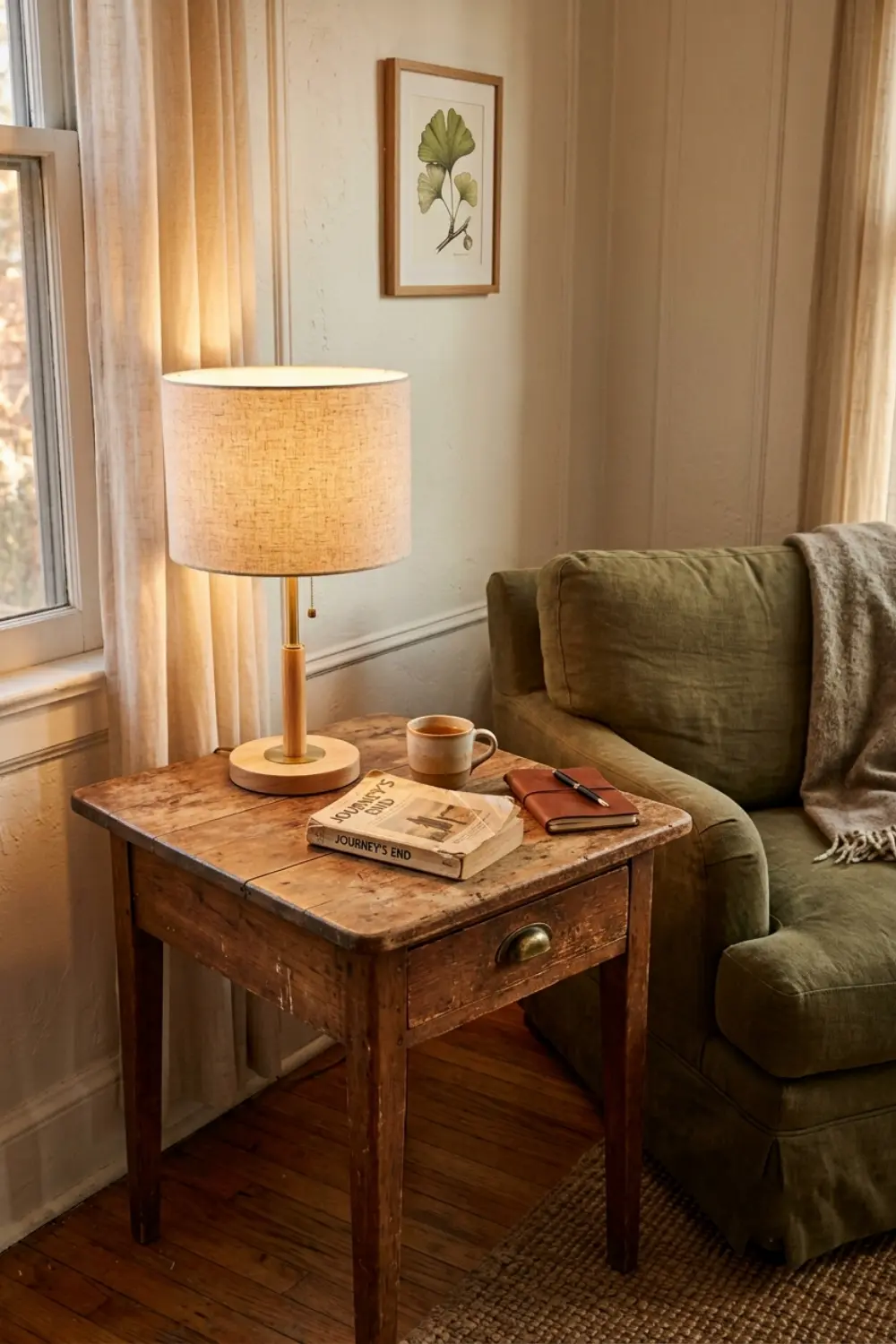
Rooms furnished entirely from one store, especially with matching sets, often look less expensive than rooms with even one or two vintage or one-of-a-kind pieces mixed in. A thrifted wood side table, a secondhand rug, or a piece passed down from family adds a sense of history and personality that new furniture alone cannot replicate. These pieces also tend to be better made than modern budget furniture, which adds to the elevated feel.
vintage wood side table living room
14. Keep Everything Well-Maintained and Add a Finishing Touch
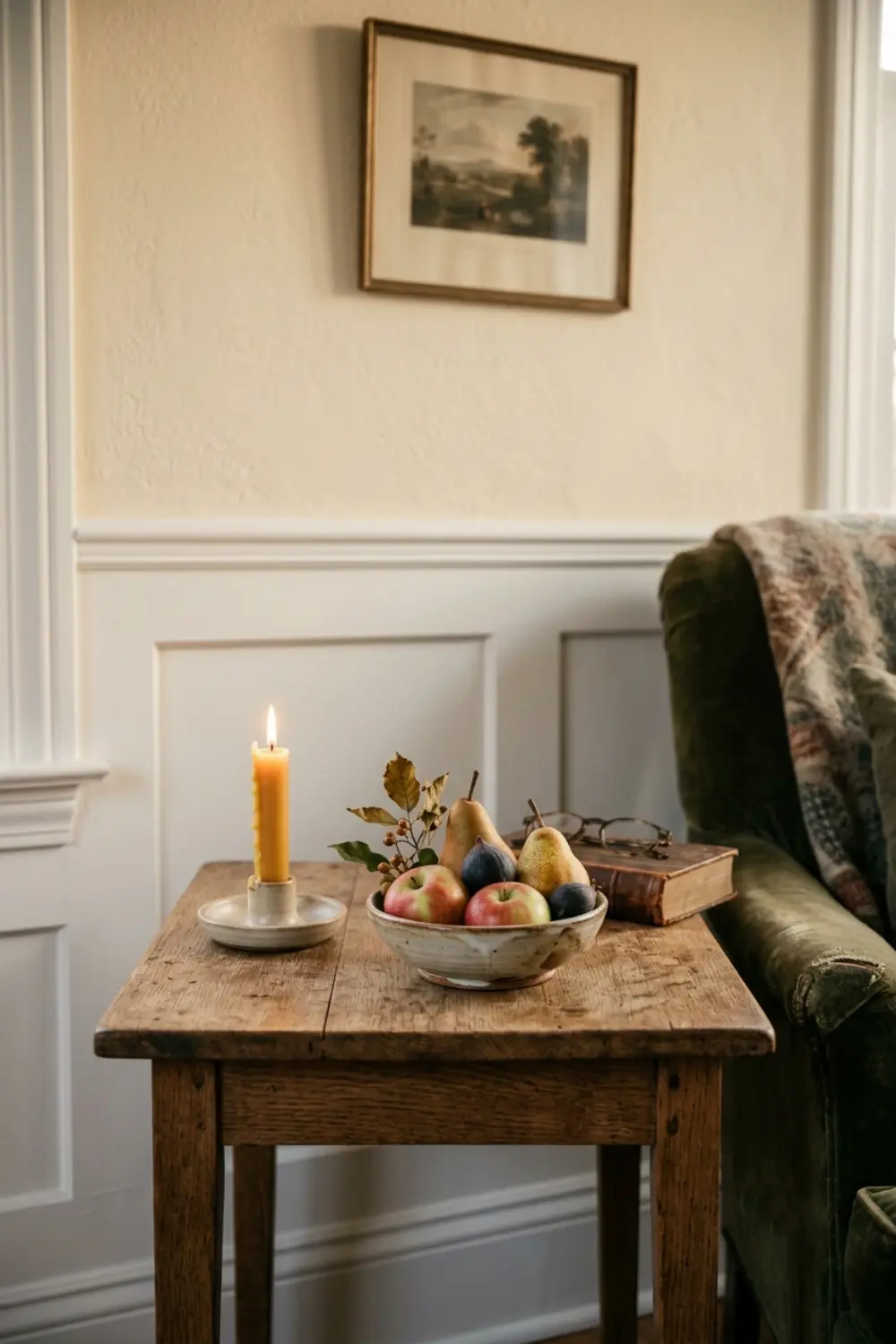
No amount of styling makes a room look expensive if things are visibly worn, chipped, or in disrepair. Touch up scuffed paint, tighten loose hardware, replace burnt-out bulbs, and fix squeaky doors before adding new decor. Once the basics are handled, one finishing touch, like fresh flowers, a scented candle, or a bowl of seasonal fruit, gives a room the sense that someone is actively living in and caring for the space.
styled candle side table finishing touch
What Makes a Home Look Expensive?
An expensive-looking home usually shares a few underlying qualities, regardless of budget. It comes down to how a space is planned and cared for more than how much was spent on it.
Proportion: furniture, rugs, and art are sized correctly for the room instead of too small.
Light: layered, warm lighting replaces a single harsh overhead source.
Restraint: a limited color palette and a handful of intentional pieces, not a room full of small objects.
Texture: natural materials like wood, linen, and stone appear throughout the space.
Upkeep: surfaces are clean, hardware works, and nothing looks worn or broken.
None of these require a large budget. They require attention to detail and a willingness to edit a space down to what actually earns its place.
What to Avoid If You Want Your Home to Look Expensive
A few common habits quietly undercut an otherwise nice room. Avoiding these matters as much as adding the right details.
Avoid Furniture and Rugs That Are Too Small
Undersized furniture and rugs are one of the most common reasons a room reads as cheap. When pieces float in the middle of a large room with empty space around them, the whole space feels unfinished. Measure the room before buying, and when in doubt, size up rather than down.
Avoid Too Many Small Decorative Objects
A shelf covered in dozens of small trinkets almost always looks more cluttered than curated. Choose fewer, slightly larger objects with varied height and texture instead of filling every inch of a surface. Restraint reads as confidence, while over-decorating reads as uncertainty.
Avoid Harsh, Mismatched Lighting
Mixing cool white bulbs with warm ones, or relying on a single bright overhead light, makes a room feel clinical rather than inviting. Stick to warm bulbs in the 2700K to 3000K range throughout a room, and layer in lamps rather than depending on one ceiling fixture alone.
Avoid Overmatching Every Piece of Furniture
A living room where every piece comes from the same matching set can feel more like a showroom than a home. Mixing finishes, eras, and sources, while staying within a consistent color palette, creates a more collected, personal look than buying everything as one bundle.
Avoid Clutter and Visible Everyday Items
Cords, mail, dishes, and daily clutter left out in the open undercut even the most carefully styled room. Build small, consistent habits, like a designated landing spot for keys and mail, so the effort put into styling a room is not undone within a day.
Warm neutrals (greige, warm white, taupe), deep earthy tones (olive, terracotta, chocolate), and soft muted blues/greens, all in matte finishes. Avoid stark bright white, neon, or overly saturated trend colors.
How do rich people decorate their homes?
Fewer, higher-quality pieces instead of lots of cheap ones; natural materials (wood, stone, linen); neutral, cohesive palettes; layered lighting; art and mirrors as focal points; clutter-free surfaces; and a mix of vintage/antique with new.
How to make a living room look expensive?
Get a properly sized rug, float furniture off the walls, add one large art piece, layer 3+ light sources, use quality textiles (linen, boucle), keep the palette to 2-3 tones, and clear the coffee table down to 2-3 styled items.
What are 5 things making a living room look dated?
Five things that can make a living room look dated are outdated light fixtures, matching furniture sets, rugs that are too small, heavy or old fashioned curtains, and cluttered shelves or surfaces..
Final Thoughts
Making your house look expensive is less about spending more and more about editing what is already there and paying attention to details like light, proportion, and texture. Start with one or two changes from this list, whether it is hanging your curtains higher, swapping out cabinet hardware, or simply clearing a cluttered surface. Small, intentional choices add up, and over time they create the kind of home that feels considered and cared for, without ever feeling like it cost a fortune.