Zero-Dollar Decorating Ideas: How to Refresh Your Home Without Spending a Cent
September 21, 2026 · Lilac Pearls
Try these zero-dollar decorating ideas to refresh your home using furniture, decor, textiles, and items you already own.
You don't need a decorating budget to make your home feel different. Sometimes the most noticeable change comes from moving furniture, editing what is already in the room, bringing pieces from another space, or simply looking at familiar items differently.
These zero-dollar decorating ideas will show you how to refresh your home without buying anything. We'll look at how to shop your own house, rearrange furniture, use free greenery, repurpose everyday items, and make small styling changes that can give a room a completely different feel.
What Is Zero-Dollar Decorating?
Zero-dollar decorating means refreshing your home's appearance using only things you already own, without spending money on new decor or furniture. It can include rearranging furniture, moving accessories between rooms, editing clutter, repurposing everyday objects, and changing how existing pieces are displayed.
The idea works because decorating is not only about purchasing things. Placement, proportion, editing, color, texture, and layout all affect how a room feels.
A room that has looked the same for several years may feel completely different after a thoughtful rearrangement, even when every item is familiar.
How to Approach a Zero-Dollar Room Refresh
Before moving everything around, take a few minutes to decide what you actually want to change. A little planning can prevent you from simply creating a different version of the same layout.
Get Inspired First
Start by looking at rooms that have a similar size, function, or color palette to yours. You don't need to copy a particular room. Instead, pay attention to what catches your eye.
Ask yourself:
1-Do I like the furniture arrangement?
2-Is the room too crowded?
3-Would a different focal point make sense?
4-Are there colors elsewhere in my home that could work here?
5-Which items do I actually enjoy seeing?
6-Is there anything I could remove?
This step is useful because it gives you a direction before you start moving furniture.If you are refreshing a living room, for example, you might discover that what you really want is a more open seating arrangement rather than more decoration.
Take Before Photos
Take a few quick photos before you begin. They don't need to look professional. A photo from each corner of the room is enough.
Photos make it easier to notice things you may overlook while standing inside the space. They also give you something to compare when you're finished.
Most importantly, don't judge the room too harshly. The purpose of the photos is simply to help you see the space more objectively.
Shop Your Own House for Decor
One of the easiest ways to decorate without spending money is to stop looking at your home room by room.Instead, look at everything you own as one collection of usable pieces.
A basket in the bedroom might work in the living room. A side table from the hallway might become a bedside table. A throw that has been sitting unused may work better on the sofa. This is essentially shopping your own house.
Identify Large Furniture You Can Move or Repurpose
Start with the largest pieces because they have the greatest effect on the room.
Try moving:
Accent chairs
Side tables
Floor lamps
Benches
Small cabinets
Ottomans
Desks
Bookcases
Dining chairs
Before moving anything, consider the size and function of the room. A piece should not be moved simply because it can be moved. It should improve the way the room works.
For example, moving an accent chair closer to the sofa can create a stronger conversation area. Moving a small cabinet away from a crowded wall can also make the room feel more open.
Raid Other Rooms for Accessories, Vases, Books, Textiles
Once the furniture is in place, look at smaller pieces. Walk through your home and collect items that could work somewhere else:
Decorative bowls
Baskets
Vases
Books
Picture frames
Cushions
Throws
Trays
Candles
Small lamps
Decorative objects
You don't need to move everything. Choose a few pieces that complement the room's existing colors and materials. A small change can be more effective than bringing half the house into one room.
Remove Before You Add (Editing Is Free Decorating)
This may be the easiest zero-dollar decorating trick of all. Before adding anything, remove a few things. Look for objects that:
No longer serve a purpose
Make surfaces feel crowded
Compete with more important pieces
Don't work with the room's current colors
Have simply been sitting there because you're used to them
A clearer surface can make the remaining objects feel more intentional. Sometimes the room doesn't need another decorative item. It needs space around the items you already like.
Rearrange for a Whole New Layout
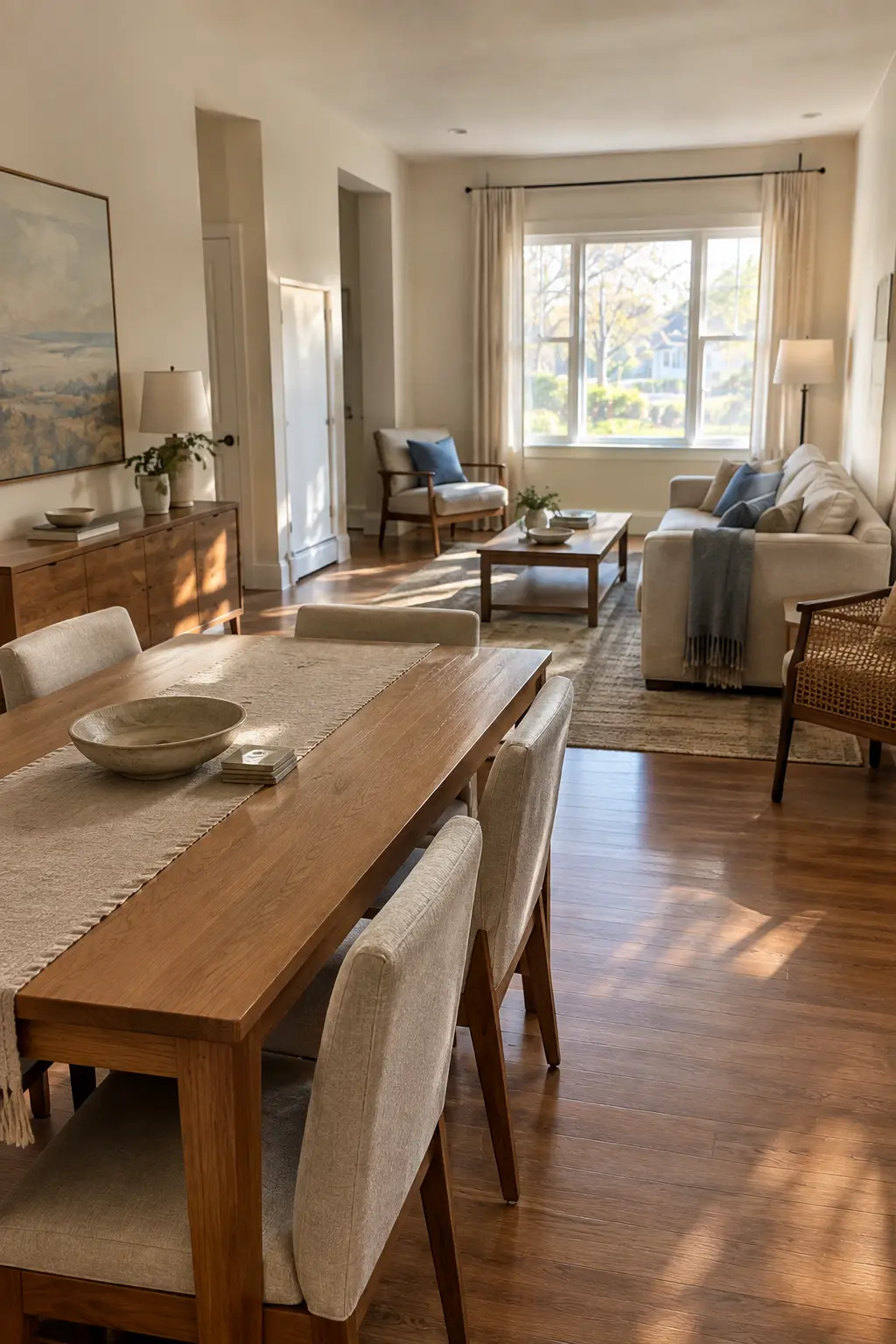
Furniture placement has a major effect on how a room looks and functions. You don't necessarily need a new sofa, rug, or coffee table. Changing their relationships to one another may be enough.
Swap Furniture Between Rooms
Look for pieces that can serve more than one purpose. For example:
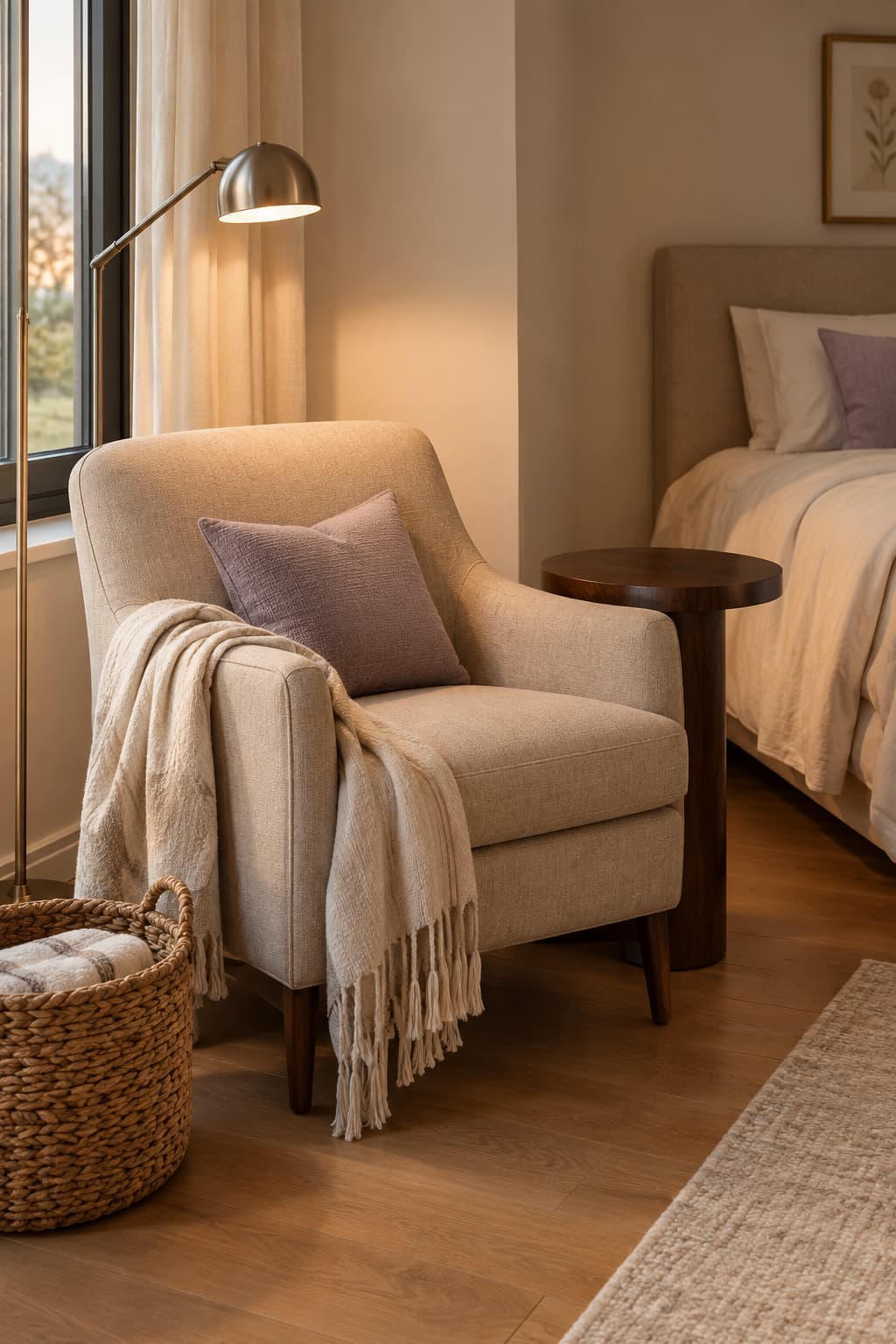
Move an accent chair from the bedroom into the living room.
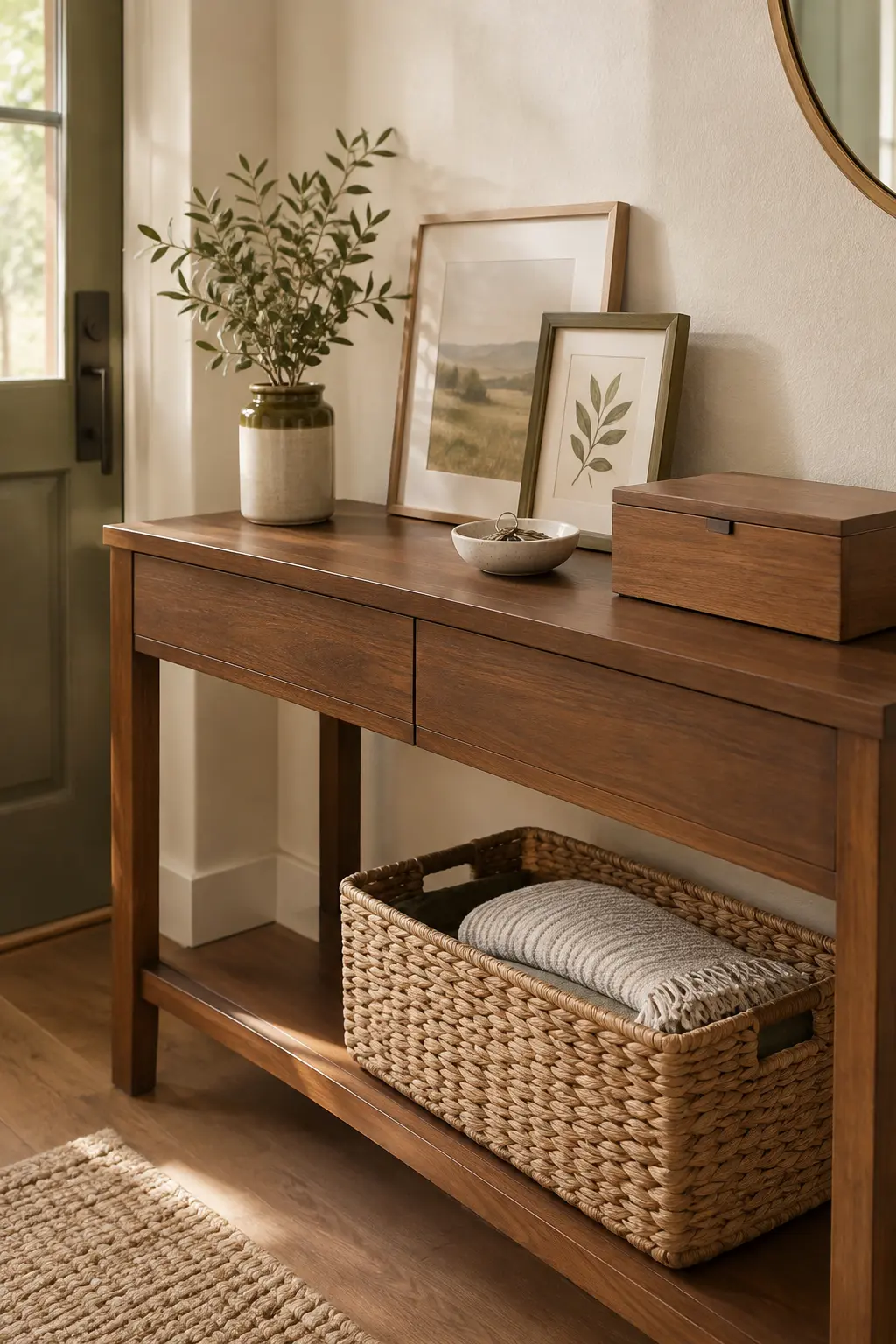
Use a small bedroom table as an entryway surface.
Move a bench to the foot of a bed.
Bring a narrow console into a hallway.
Use dining chairs temporarily in another room when extra seating is needed.
Before moving anything, make sure the new location still allows people to walk comfortably through the room. A beautiful arrangement that blocks a doorway or creates a difficult walkway isn't a useful refresh.
Create a New Focal Point
Every room benefits from having something that naturally attracts attention. That doesn't have to be expensive. A focal point could be:
A large window
A fireplace
A piece of artwork
A textured wall
A well-styled console
A reading chair
A beautiful architectural feature
If the television is currently dominating the room, for example, you can balance it with surrounding furniture, artwork, lighting, or storage rather than buying a completely new setup. The goal is to guide the eye instead of allowing one element to control the entire room.
"Play With What You've Got" Styling Tricks That Cost Nothing
Try small changes before committing to a major rearrangement. You can:
Turn a chair toward a window.
Angle two chairs slightly toward each other.
Move a lamp closer to the seating area.
Change which cushions sit together.
Fold a throw differently.
Clear one section of a shelf.
Group similar objects together.
Move artwork to another suitable wall.
Leave more empty space around a favorite piece.
These changes cost nothing, but they can change the visual balance of the room.
rearrange furniture zero dollar room refresh
Free Ways to Bring Nature Indoors
Nature can add color, texture, and softness to a room without requiring a shopping trip. If you already have plants at home, you may be able to move them temporarily between rooms or propagate healthy cuttings.
If you don't have indoor plants, you can still use naturally available branches or greenery where appropriate, as long as they are safe and suitable for your home.
Best Free/Low-Cost Plants for Each Room
If you already have plants, think about where they would be most useful visually. For example:
Living room: A larger established plant can fill an empty corner.
Bedroom: A smaller plant can soften a bedside or dresser area.
Home office: A compact plant can add color without taking much workspace.
Entryway: A suitable plant can make an otherwise plain corner feel more welcoming.
Bathroom: Only use plants that can reasonably tolerate the room's available light and humidity.
You don't need to put a plant in every room. The right placement matters more than the number of plants.
Also consider the actual conditions of each room. A plant that thrives near a bright window may struggle in a darker corner, so choose placement based on its needs rather than appearance alone.
Propagate Cuttings Instead of Buying New Plants
Propagation can be a simple way to create new plants from ones you already own.
Depending on the plant species, healthy cuttings can sometimes develop roots in water or an appropriate growing medium.
The important point is that not every plant propagates in the same way. Check the requirements of the specific plant before taking cuttings.
If propagation works for your plant, place the cutting somewhere with suitable light and give it time. It is a slower approach than purchasing a mature plant, but it fits naturally with a no-spend decorating approach.
DIY Ideas Using What You Already Own
You don't need specialized craft supplies to make small changes around the house. Before buying materials for a DIY project, look through your storage areas for objects that can be cleaned, reorganized, repurposed, or displayed differently.
Repurpose Baskets, Boxes & Containers for Storage Display
Storage pieces don't always have to disappear inside cabinets. A sturdy basket can hold folded throws. A wooden box can organize smaller items on a shelf. A simple container can keep everyday objects together instead of scattering them across a surface.
The key is to make the storage look intentional. Group similar items together, choose one or two useful containers for an area, and avoid filling every open surface.
Rework Existing Frames, Shelves & Textiles
Frames can sometimes be moved to different rooms or regrouped into a simpler arrangement.
Shelves can also be edited rather than completely restyled. Remove pieces that feel unnecessary, then place a few meaningful objects at different heights. Textiles offer another easy opportunity. Try:
Moving a throw from one chair to another.
Swapping cushions between rooms.
Folding a blanket differently.
Repositioning a table runner.
Using a textile to soften a hard-edged surface where appropriate.
These small changes can create variation without requiring new decor.
repurpose existing decor zero dollar diy
Styling Tricks That Make a Room Feel Redesigned
Sometimes the room itself isn't the problem. The problem may be that the furniture, accessories, and focal points aren't working together as well as they could. A few styling adjustments can improve that relationship.
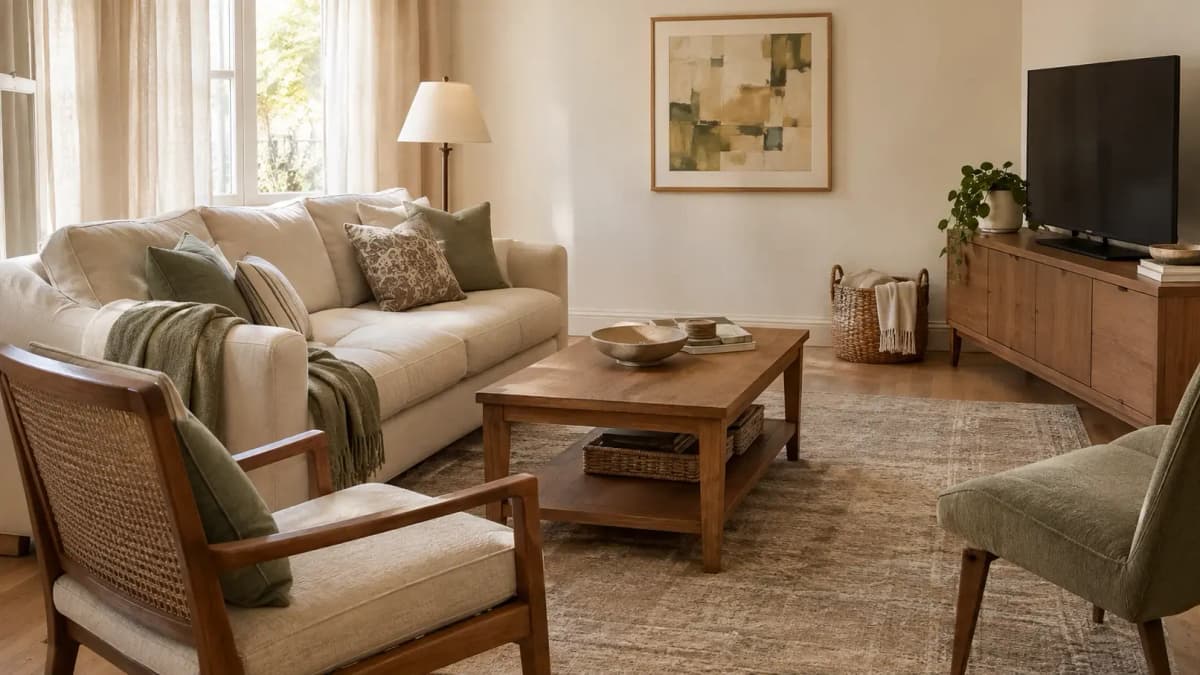
Decorating Around a TV or Awkward Focal Point
A television can easily become the first thing you notice when you enter a living room. If you can't move the TV, work with the space around it.
You can create balance by:
Centering the seating arrangement around the room rather than the television alone.
Using existing artwork or decor nearby.
Keeping the media console visually organized.
Adding symmetry where appropriate.
Creating another point of interest elsewhere in the room.
The goal isn't necessarily to hide the television. It's to prevent it from feeling like the only important element in the space.
Pairing and Rearranging Existing Furniture
Furniture often looks different when its relationship to another piece changes. For example, dining chairs don't always need to remain around the dining table in exactly the same arrangement. If you have extra chairs, one might work temporarily as an accent chair elsewhere.
Similarly, two small side tables can sometimes be grouped together rather than separated. Before moving anything, consider scale.
Two pieces may work beautifully together if their proportions are compatible. If one piece overwhelms the other, the arrangement may feel unbalanced.
Layering Textures Without New Purchases
Texture doesn't require new shopping. Look around your home for differences in material:
Wood
Cotton
Linen
Woven fibers
Ceramic
Metal
Glass
Upholstery
A room can feel more interesting when several materials are visible together. For example, a smooth wooden table beside a soft upholstered chair and a woven basket creates more visual variation than several objects made from the same material.
You don't need to add more items. Sometimes simply bringing existing textures into the same area is enough.
layering textures without buying decor
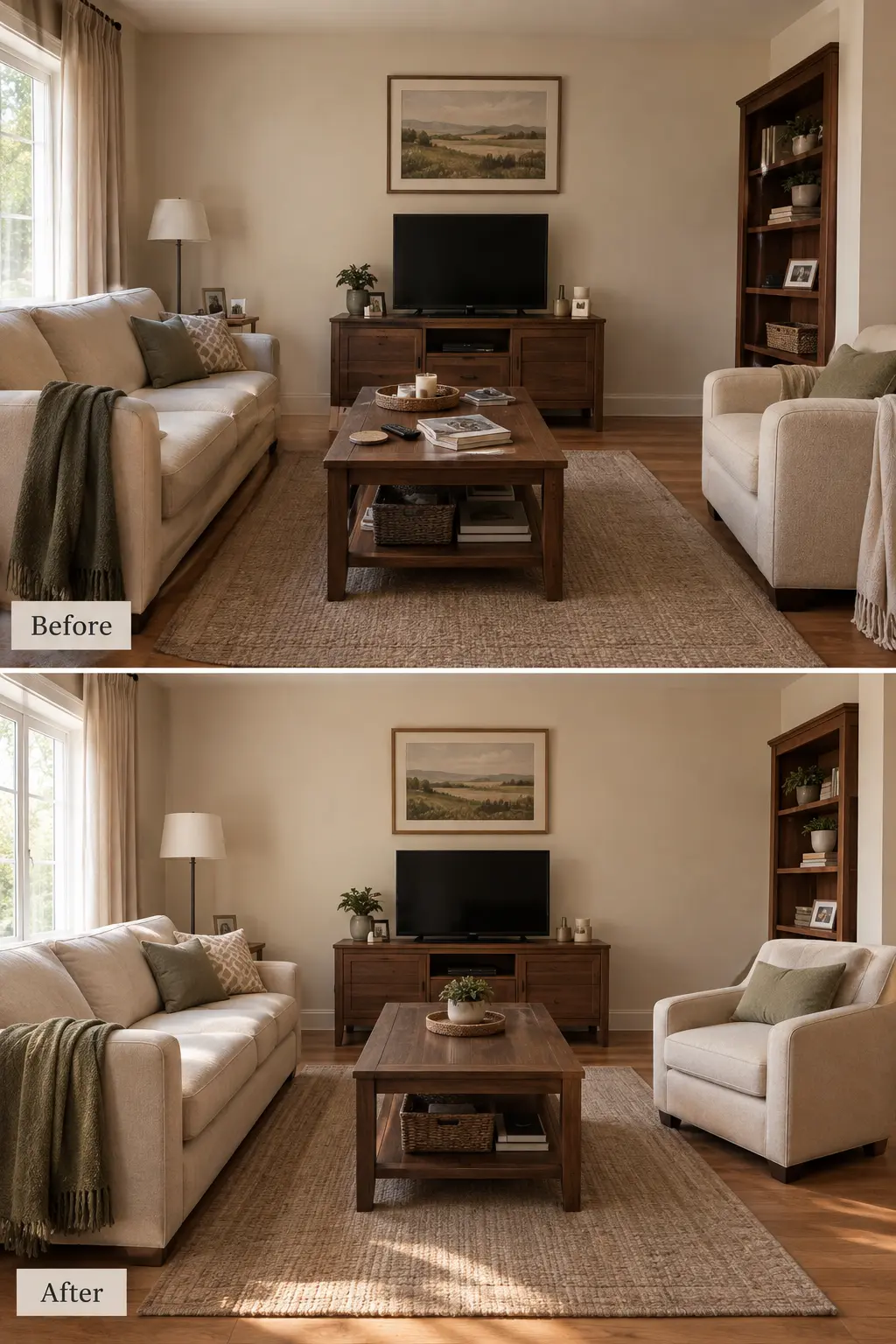
Before-and-After: What a $0 Refresh Actually Looks Like
A zero-dollar room refresh does not have to look like a completely different house. In fact, realistic expectations are important. You may notice changes such as:
A clearer walkway
Better furniture balance
A stronger focal point
Less visual clutter
Better use of empty corners
More cohesive colors
Existing decor being used more effectively
The furniture may still be the same. The walls may still be the same. You may not have a new rug or expensive accessories.
And that's completely fine. The purpose of a $0 refresh is to improve what you already have, not pretend that rearranging a sofa is the same thing as renovating a room.
A Simple Before-and-After Method
Take your original photos and compare them with the refreshed room.
Look at:
Furniture placement Does the room flow better?
Open space Are walkways clearer?
Focal point Does your eye naturally settle somewhere?
Surface editing Are the important pieces easier to notice?
Function Is the room still comfortable for everyday use?
Overall balance Does anything now feel too crowded or disconnected?
If the answer is yes to several of these, your refresh has done its job.
zero dollar room refresh before after
FAQs
Can you really redecorate with no money?
Yes. Rearrange furniture, move decor between rooms, remove clutter, and reuse what you already own.
What's the fastest zero-dollar decorating idea?
Rearrange your furniture or clear a crowded surface. Small changes can quickly make a room feel fresh.
How do I make my house look new without buying anything?
Change furniture layouts, swap accessories between rooms, and restyle existing pieces.
What should I do first when decorating on a $0 budget?
Take a few photos and identify what isn't working. Then choose one area to improve.
Are free decorating ideas actually effective long-term?
Yes. Changes that improve layout, function, and organization can continue to work well.
Conclusion
You don't need to spend money to refresh your home. Rearrange, edit, swap, and repurpose what you already have.
A few thoughtful changes can make your space feel more comfortable and inviting.