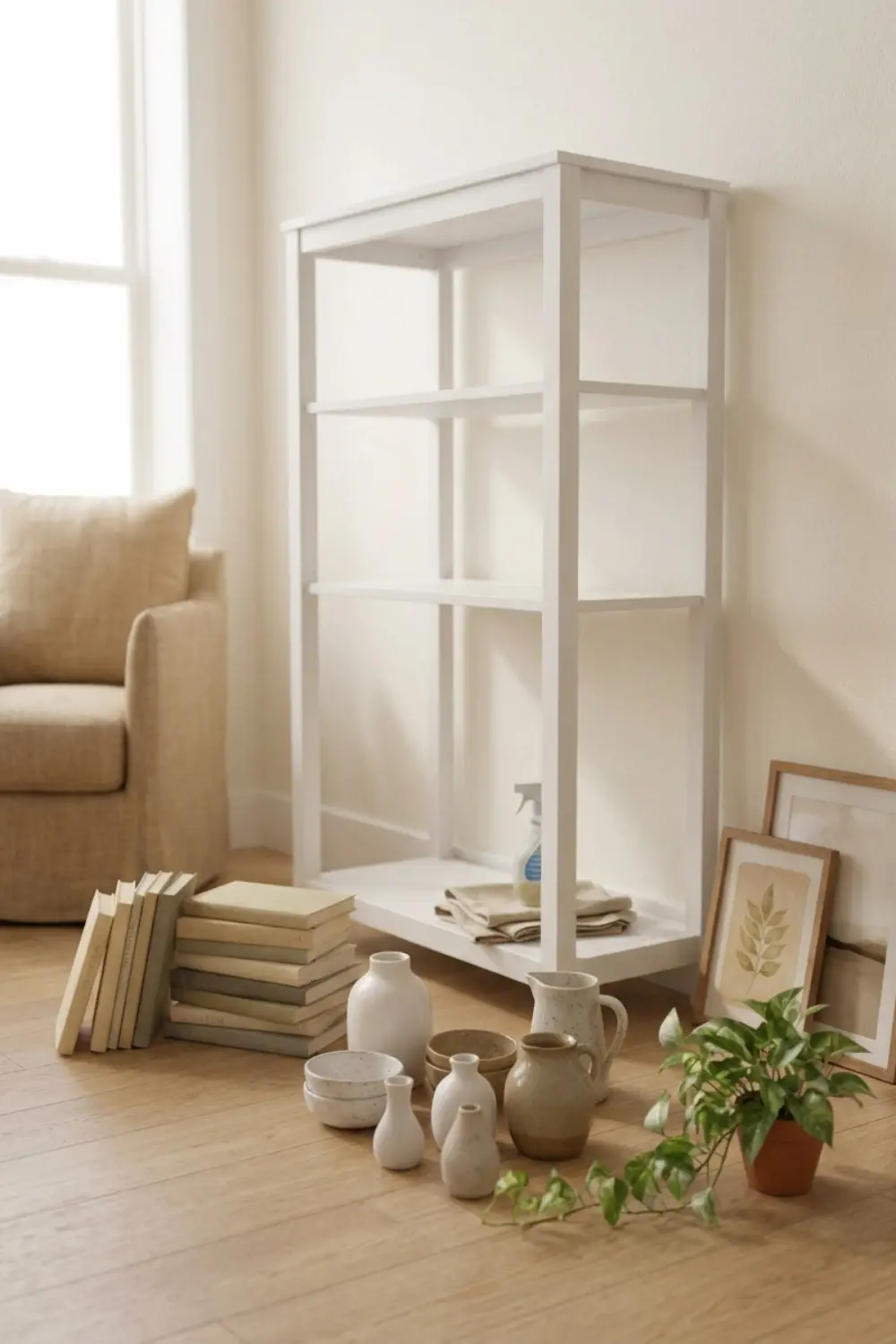
15 Budget Bookshelf Styling Ideas That Look Expensive
November 01, 2026 · Lilac Pearls
Style your bookshelf on a budget with 15 simple ideas, 4 easy formulas, and a step-by-step method. Most cost under $50 and take about an hour.
A bookshelf can look messy fast, even when you love everything on it. The good news is that styling one rarely needs new furniture or a big budget. It mostly needs a simple formula, a few well-chosen objects, and some patience with space.
In this guide, you will find 4 easy styling formulas, 15 budget-friendly ideas with estimated costs, and a step-by-step method you can finish in about an hour. If your shelves sit near a favorite chair, my reading nook ideaspair nicely with the tips below.
How Do You Style a Bookshelf on a Budget?
To style a bookshelf on a budget, start by shopping your home, then mix vertical and horizontal book stacks, group objects in odd numbers, and leave some shelf space empty. Thrifted ceramics, a trailing plant, and framed art fill the gaps for very little money.
Clear the shelves and gather decor from around your home.
Sort everything into piles: books, objects, art, and plants.
Place the largest pieces first, with heavier items on lower shelves.
Add small objects in groups of three, varying the heights.
Step back, then remove one item from each shelf.
4 Easy Bookshelf Styling Formulas to Try First
Formulas take the guesswork out of styling. Pick one per shelf, repeat it loosely across the unit, and the whole bookcase will feel connected without looking matched.
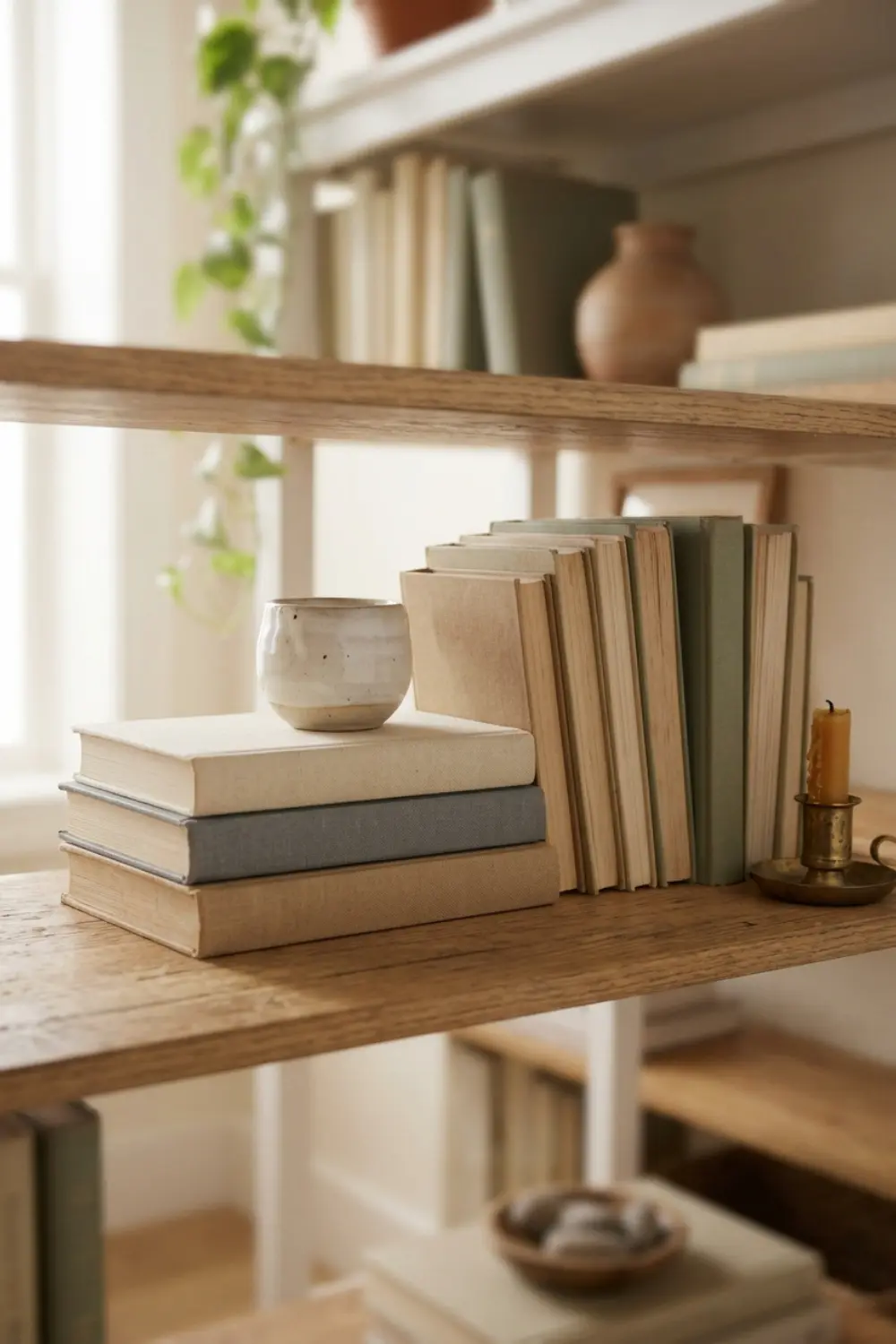
Formula 1: Horizontal Book Stack + Object on Top
Stack two or three books flat, then set a small object on top, such as a candle, a small bowl, or a bud vase. This works especially well on shelves where a full row of upright books feels too heavy.
horizontal book stack with object bookshelf
Formula 2: 3 to 5 Vertical Books + a Bookend or Object
Group three to five upright books, then finish the group with a bookend, a small sculpture, or any object with a bit of weight. The books stay tidy, and the object gives the eye somewhere to land.
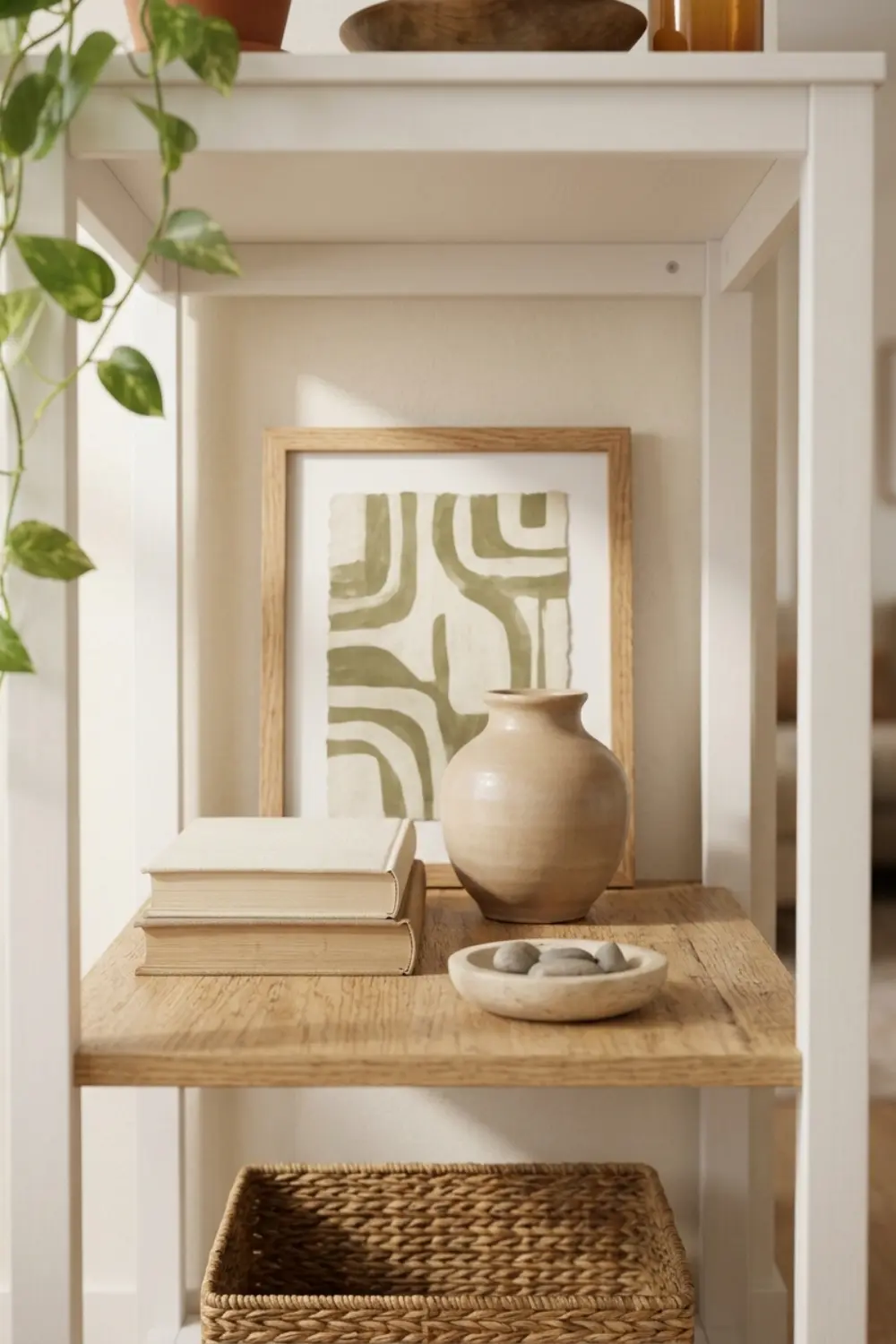
Formula 3: Leaning Art + Layered Objects in Front
Lean a framed print against the back of the shelf, then layer two or three objects of different sizes in front of it. It adds depth without any wall damage, which is helpful if you rent.
leaning art layered objects bookshelf
Formula 4: A Collection of Objects at Varied Heights
Group items that share a material or color, such as ceramics in cream and brown, and arrange them so the heights rise and fall. Keep the tallest piece toward one side rather than dead center.
A Simple Ratio to Guide Your Shelves
As a rough starting point, aim for about 60% books, 30% decorative objects, and 10% greenery or art on each unit. Think of it as a guide, not a rule. If you own fewer books, shift more of the shelf to objects and plants, and if you own many, let the books lead.
15 Budget Bookshelf Styling Ideas
Each idea below includes an estimated cost so you can plan around your budget. Most take less than 15 minutes, so you can try a few and keep what you like.
Ideas Under $10
1. Shop Your Home First (Cost: $0)
Before buying anything, gather decor from other rooms: vases, trays, candle holders, framed photos, and spare books. Pieces often look fresh once they are moved to a new spot. My guide to zero-dollar decorating ideas shows more ways to restyle what you already own.
2. Alternate Horizontal Stacks and Vertical Runs (Cost: $0)
Fill most of a shelf with upright books, then break them up with a short horizontal stack of two or three. The change in direction gives the eye a place to rest and creates a perch for a small object. It is the easiest way to make a full shelf look intentional.
3. Use the Rule of Three (Cost: $0 to $10)
Group decor in odd numbers, usually three. Pair a tall vase, a medium bowl, and a small candle holder, for example. Odd groupings feel relaxed and natural, while even pairs can look stiff.
4. Leave an Empty Third (Cost: $0)
Resist filling every inch. Leaving about a third of each shelf open gives your decor room to stand out and makes the whole unit feel calmer. If gaps make you nervous, start with just one open section and live with it for a few days.
5. Group Books by Tone (Cost: $0)
Arranging books by color can look polished, but a full rainbow often feels busy. A softer option is to group neutrals and add one small pocket of a bolder color. If a few covers clash, turn them around or wrap them in plain paper.
Ideas from $10 to $30
6. Thrifted Ceramics and Vases (Cost: $5 to $15)
Thrift stores are one of the best sources of shelf decor. Look for ceramic vases, small bowls, and simple lamp bases in warm whites, creams, and earthy tones. Shape matters more than brand, and mixing sizes keeps a group interesting. Wash them, wipe the bottoms, and they are ready. For a longer list of what to look for, see my thrifted home decor ideas.
thrift store finds bookshelf decor
7. Add a Trailing Plant (Cost: $8 to $15)
Greenery softens the straight lines of a bookcase. Place a trailing plant on the top shelf so the stems spill down. A pothos is a forgiving real option for most rooms, while a good faux plant works well in dark corners or on high shelves that are hard to reach.
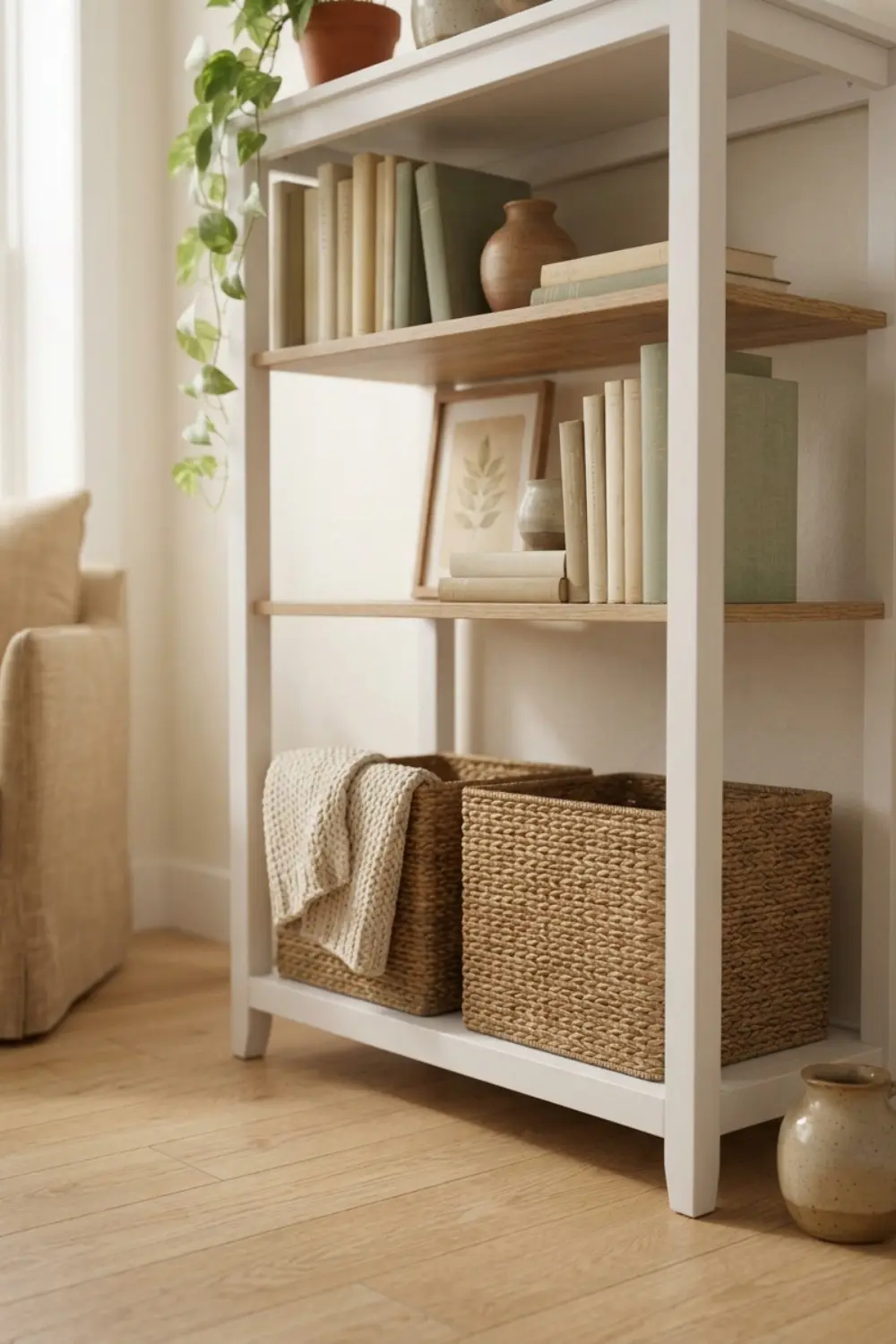
8. Anchor the Bottom Shelf with Baskets (Cost: $8 to $20)
Bottom shelves often turn into a pile of clutter. Woven baskets hide it while adding texture. Use them for throw blankets, chargers, magazines, or small toys, and choose a few in similar tones so they read as one set.
9. Layer Framed Art Behind Books (Cost: $5 to $20)
Lean one or two framed prints at the back of a shelf, then layer smaller objects in front. It adds depth without drilling any holes. Thrifted frames with a fresh print work well, and my cheap DIY wall art ideashave simple prints you can make yourself.
10. Use Heavy Objects as Bookends (Cost: $0 to $15)
Bookends do not need to be matching pairs. A chunky candle holder, a smooth stone, a small sculpture, or even a flat stack of books can hold a vertical group in place. Choose something with enough weight to keep the books from leaning.
Ideas from $30 to $50
11. Add a Peel-and-Stick Backing (Cost: $15 to $30)
Covering the back panel with peel-and-stick wallpaper or textured contact paper makes shelves look custom. Pick a subtle pattern or a color slightly deeper than your wall so objects stand out. Measure first and smooth it slowly to avoid bubbles. Because adhesives can affect some surfaces, test a small hidden area before committing. If you rent, my apartment wall decorating tips for renters cover other removable options.
peel and stick bookshelf backing
12. Add Battery-Powered Lighting (Cost: $10 to $25)
Small battery-powered LED strips or puck lights can brighten a dark bookcase without any wiring. Warm white light looks the most natural. Stick them under a shelf edge near the front so the lights stay hidden, and look for ones with a remote or timer.
13. Place a Slim Lamp Beside the Unit (Cost: $20 to $40)
A slim floor or table lamp next to the bookcase adds a soft glow and makes the corner feel finished. A thrifted lamp with a new shade is often cheaper than buying new, and it gives the area a more collected feel.
14. Face Books Out for a Cover Display (Cost: $0)
Turn a few books with attractive covers to face forward, resting them on a small stand or leaning them against the back. Treat them like small art pieces. Art books and picture books often have beautiful covers, and this works well on a middle shelf at eye level.
15. Add Natural Textures (Cost: $0 to $10)
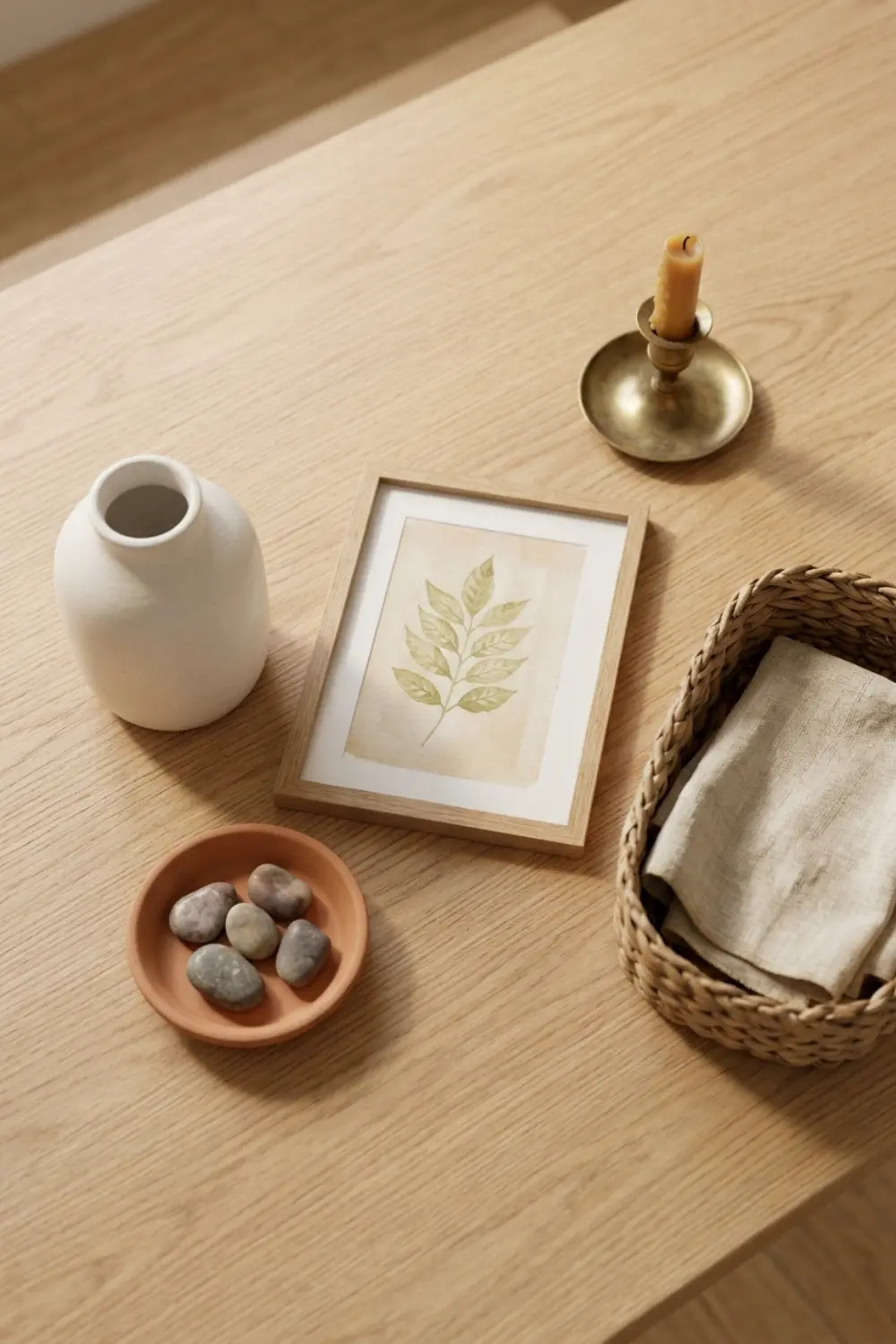
Wood, stone, shells, dried stems, and linen add warmth without looking busy. A small wooden bowl, a smooth stone, or a few dried branches in a vase can make a shelf feel more layered. Try to mix at least two textures per shelf so nothing looks flat.
How to Style a Bookshelf Step by Step
If you prefer a clear process, follow these steps from start to finish. Set aside about an hour.
Clear the shelves. Remove everything and wipe down each shelf. A blank slate makes it easier to see what you actually want to keep.
Sort into piles. Group books, objects, art, plants, and baskets separately. Set aside anything you do not love.
Place the big pieces first. Add baskets, framed art, and book groups. Keep heavier items on the lower shelves.
Layer in objects. Add small items in groups of three, mixing heights, textures, and shapes.
Check balance. Step back or take a photo. Photos show uneven weight quickly.
Edit. Remove one item from each shelf and leave some space open.
Where to Find Cheap Bookshelf Decor
You do not need a big shopping trip. These sources tend to offer the best value for shelf decor.
Thrift stores: ceramics, vases, trays, frames, and lamps. Many pieces cost only a few dollars.
Secondhand marketplaces: useful for baskets, wooden decor, and lamps, often at a lower price than new.
Dollar and discount stores: simple frames, candle holders, faux stems, and storage baskets.
Your own home: trays, photos, and spare vases from other rooms.
Outdoors: branches, smooth stones, and dried stems cost nothing and add natural texture.
Before buying, hold each piece up and ask whether it works with the colors already on your shelves. A smaller, consistent palette makes inexpensive items look more deliberate.
sort bookshelf decor before styling
Bookshelf Styling Ideas for Different Rooms
Living room: use Formulas 1 and 3 for a layered look, and add a lamp or lighting nearby.
Home office: keep shelves tidy and functional, with baskets for supplies. See my small home office ideas for more.
Bedroom: keep it quieter with fewer objects, softer colors, and one plant.
Small spaces and rentals: use leaning art, peel-and-stick backing, and battery lights so nothing needs drilling.
Frequently Asked Questions
Should books be styled vertically or horizontally?
Use both. Vertical books fill most of the space, while a short horizontal stack breaks up the rows and creates a spot for small decor. Mixing directions looks more natural than keeping every book the same way.
How many books should go in a vertical group?
Three to five books is a good range. Fewer than three can look sparse, and more than five tends to look like a standard shelf. Finish each group with a bookend or small object to keep it tidy.
How do I style a bookshelf without many books?
Lean on objects, art, and plants. Use baskets for storage, leaning prints for color, and groups of three for decor. Leaving open space is also fine, since it keeps the shelf calm rather than empty.
Is it okay to turn book spines backward?
It is a personal choice. Turned pages create a soft, neutral look, but you will not see the titles, which makes books harder to find. A gentler option is to cover a few with plain paper or group by tone.
How can I decorate shelves cheaply if I rent?
Choose options that do not need drilling: leaning art, peel-and-stick backing (tested in a hidden spot first), battery lights, and thrifted decor. All of these can be removed or changed without affecting the shelf or wall.
What colors work best for bookshelf decor?
Stick to two or three tones that already exist in your room, such as cream, tan, and a soft green. Repeating the same colors across shelves makes inexpensive items look like they belong together.
Final Thoughts
Styling a bookshelf on a budget comes down to a few reliable habits: use a formula, group items in threes, mix textures, and leave space. You can start with what you already own and add one or two thrifted pieces over time. The same ideas apply when styling a budget coffee table, so your rooms end up feeling consistent.
If you would like more ways to make your home feel polished without overspending, explore my guide to making your house look expensive on a budget. Take your time with the process, and enjoy it.